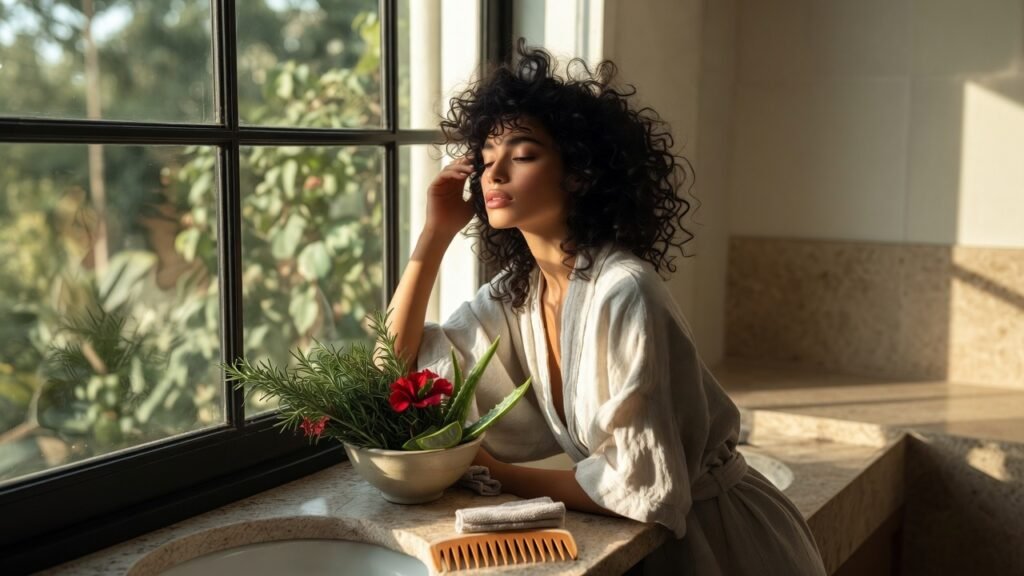
Curly hair has a personality all its own. Some days it’s soft, springy, and beautifully defined, while on other days it may seem dry, frizzy, or difficult to manage. Rather than chasing perfection, many people are rediscovering the value of working with their natural texture through gentle, botanical hair care practices.
Supporting curl definition isn’t simply about styling—it begins with nurturing the health of both your hair and scalp. Herbal traditions have long embraced plant-based ingredients that may help promote moisture, softness, and overall hair wellness. Combined with mindful daily habits, botanical care can become a comforting ritual that celebrates your natural curls instead of fighting against them.
Key Takeaways
- Curl definition often begins with maintaining healthy moisture levels.
- Botanical ingredients have traditionally been used to support soft, healthy-looking hair.
- Gentle handling may help reduce unnecessary frizz and breakage.
- Consistent daily habits often matter more than complicated routines.
- Supporting scalp wellness may contribute to healthier hair over time.
Why Hydration Is the Foundation of Defined Curls
Curly hair naturally tends to be drier than straight hair because the scalp’s natural oils travel more slowly along each curl. As moisture decreases, curls may lose their shape and become more prone to frizz.
Supporting hydration doesn’t necessarily require complicated routines. Simple habits such as using gentle cleansers, minimizing excessive heat, and incorporating botanical moisture sources may help curls retain their natural bounce.
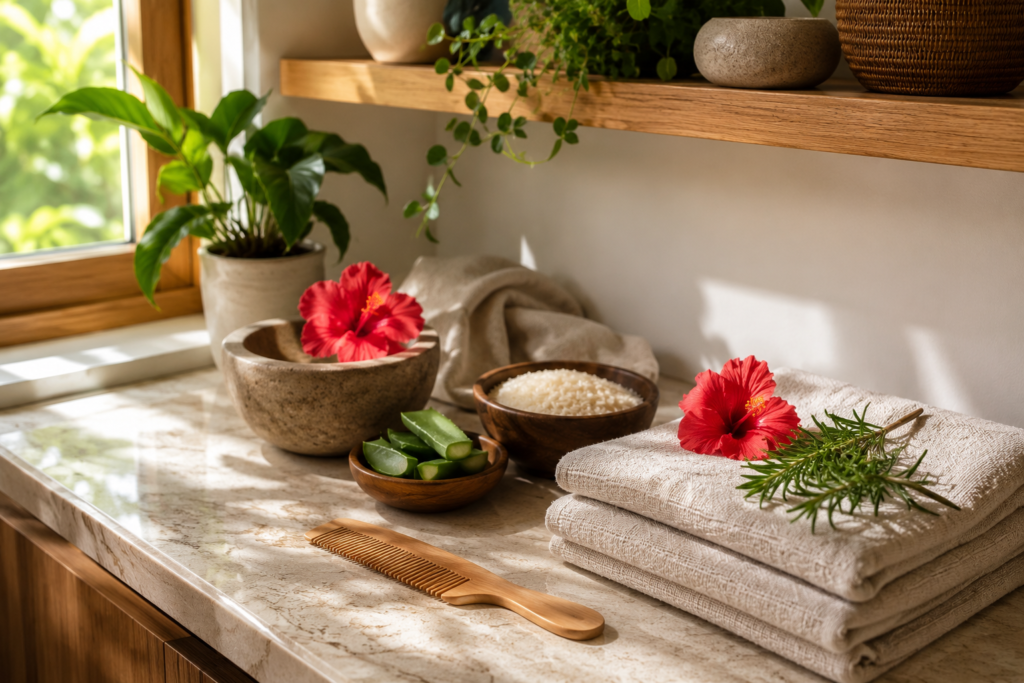
Herbs and botanicals traditionally used in hair care—such as aloe vera, hibiscus, and rosemary—have long been appreciated for helping promote softness and supporting healthy-looking hair when included as part of a balanced routine.
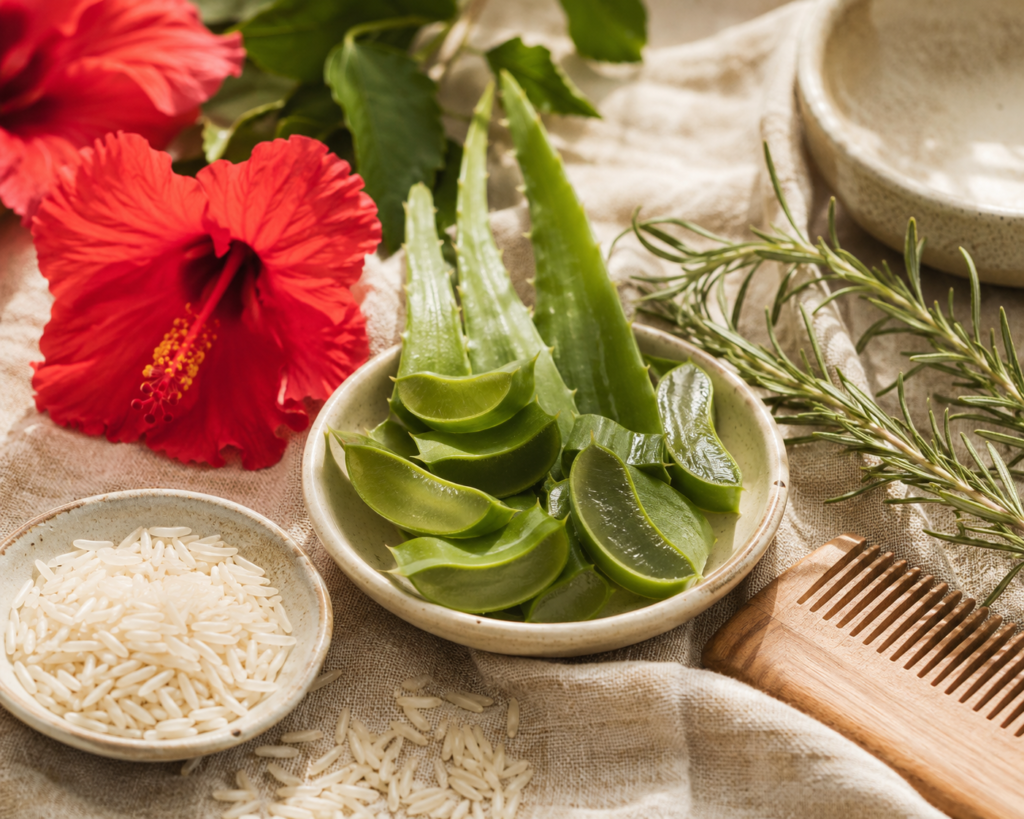
Botanical Ingredients Traditionally Used for Curl Care
Many traditional herbal practices include plants that are valued for their gentle nourishing properties.
Aloe Vera
Aloe vera is commonly used to help support hydration and smooth the hair cuticle, which may encourage curls to appear more defined while reducing the appearance of dryness.
Hibiscus
Hibiscus has been traditionally incorporated into botanical hair rituals because it may help promote softness and improve the overall feel of textured hair.
Rosemary
Rosemary has a long history in herbal hair care. It is traditionally used to support scalp wellness, creating an environment that may encourage healthier-looking hair over time.
Rice-Based Botanical Rinses
Rice-inspired botanical preparations have been used in various cultures as part of traditional beauty practices. They may help improve the appearance of shine while leaving curls feeling smoother and easier to manage.
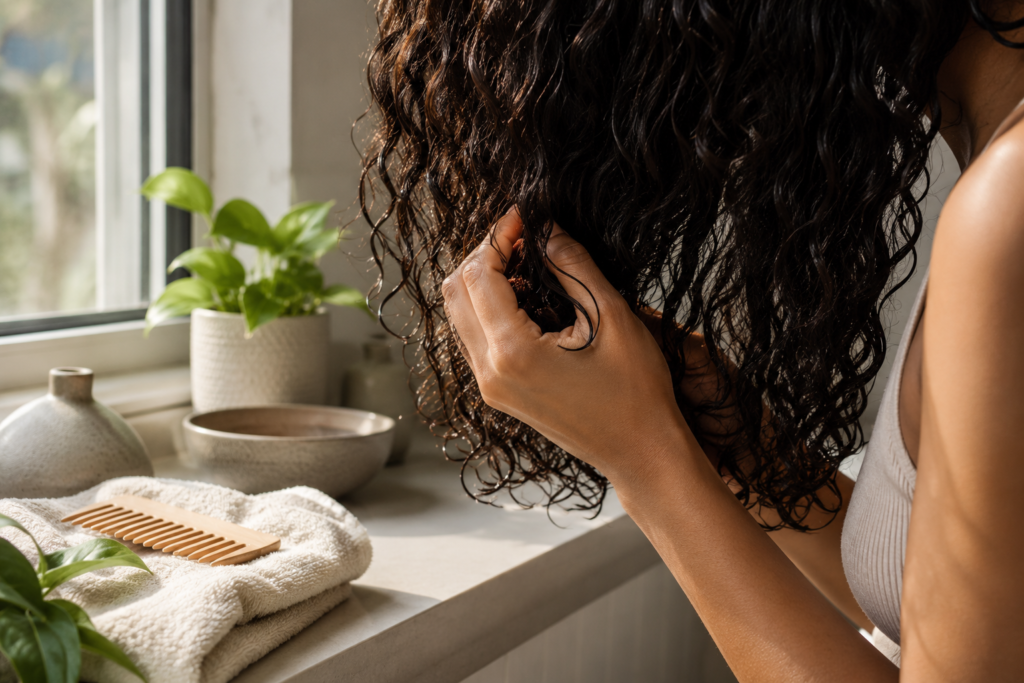
Small Daily Habits That May Support Curl Definition
Healthy curls often benefit more from consistency than complexity. A few mindful habits can make a noticeable difference over time.
Be Gentle During Wash Day
Avoid aggressively rubbing curls with towels. Instead, gently squeeze out excess water using a soft cotton T-shirt or microfiber towel to help preserve your curl pattern.
Apply Moisture While Hair Is Damp
Many curl enthusiasts find that applying moisturizing products while hair is still damp helps lock in hydration more effectively than waiting until hair has dried.
Limit Excessive Heat Styling
Frequent use of high heat may contribute to dryness and reduced curl elasticity. Whenever possible, allow curls to air dry or use gentle heat settings.
Protect Hair While Sleeping
Sleeping on a satin or silk pillowcase may help reduce friction overnight, helping curls maintain their shape until morning.
Common Curl Care Misconceptions
Many people unknowingly make curl care more difficult by following common myths.
“More Product Equals Better Definition”
In reality, using too much product may weigh curls down, making them appear less defined.
“Frizz Means Your Hair Is Unhealthy”
Frizz is a natural characteristic of many curl types. Humidity, weather, and daily movement all influence how curls behave.
“Natural Hair Care Works Overnight”
Botanical wellness is often rooted in patience and consistency. Gentle routines practiced regularly may offer gradual improvements rather than instant transformations.
Caring for Your Scalp Supports Healthy Hair
Beautiful curls begin at the scalp. Maintaining a clean, balanced scalp may help support healthier-looking hair over time.
Simple habits such as gentle scalp massage, avoiding excessive product buildup, and choosing botanical-inspired cleansing routines can become relaxing moments of self-care rather than rushed chores.
Many herbal traditions also include mindful scalp massage as part of regular wellness rituals. Beyond supporting circulation, these quiet moments encourage intentional self-care and relaxation.
Building a Botanical Curl Care Ritual
Rather than focusing on achieving “perfect” curls every day, consider creating a simple routine that feels sustainable.
A botanical-inspired ritual might include:
- Cleansing gently without stripping natural oils.
- Using moisture-supporting herbal ingredients.
- Allowing curls to dry naturally whenever possible.
- Refreshing curls with light hydration between wash days.
- Practicing patience while your hair responds to consistent care.
Like tending a garden, healthy curls often flourish through steady attention rather than dramatic changes.
Final Reflections
Supporting curl definition is less about controlling your natural texture and more about caring for it with patience, intention, and consistency. Botanical hair care invites us to slow down, appreciate traditional plant wisdom, and build simple rituals that honor the unique beauty of our hair.
Every curl tells its own story. With gentle hydration, thoughtful care, and nourishing botanical practices, you may find that your natural texture becomes easier to embrace and enjoy—one mindful ritual at a time.
Natural wellness practices can complement a healthy hair care routine but are not intended to replace professional medical advice. If you have persistent scalp concerns or significant hair loss, consult a qualified healthcare professional or dermatologist for personalized guidance.