Hibiscus is more than a beautiful tropical flower. In natural hair care, it has earned a reputation as a gentle botanical ingredient that supports softer strands, a healthy-looking scalp, and naturally radiant shine. Whether used as a tea rinse, powder mask, infused oil, or leave-in-friendly blend, hibiscus can fit easily into many textured hair routines.
For people with curls, coils, waves, or dry strands, hibiscus is especially appealing because it is often associated with moisture, slip, and manageability. While it is not a miracle cure for hair concerns, it can be a nourishing plant-based addition to a consistent routine focused on hydration, scalp care, and protection.
Why Hibiscus Is Popular in Natural Hair Care
Hibiscus contains naturally occurring plant compounds, including antioxidants, amino acids, and mucilage-like properties that can help give products a smoother feel. In DIY beauty, hibiscus powder and hibiscus tea are often used to create slippery, conditioning blends that make detangling feel easier.
This is one reason hibiscus is popular among people with natural hair textures. Curly and coily hair can be more prone to dryness because natural scalp oils have a harder time traveling down the bends of the hair shaft. Ingredients that help soften and smooth the hair can make wash day more comfortable and reduce unnecessary tugging.
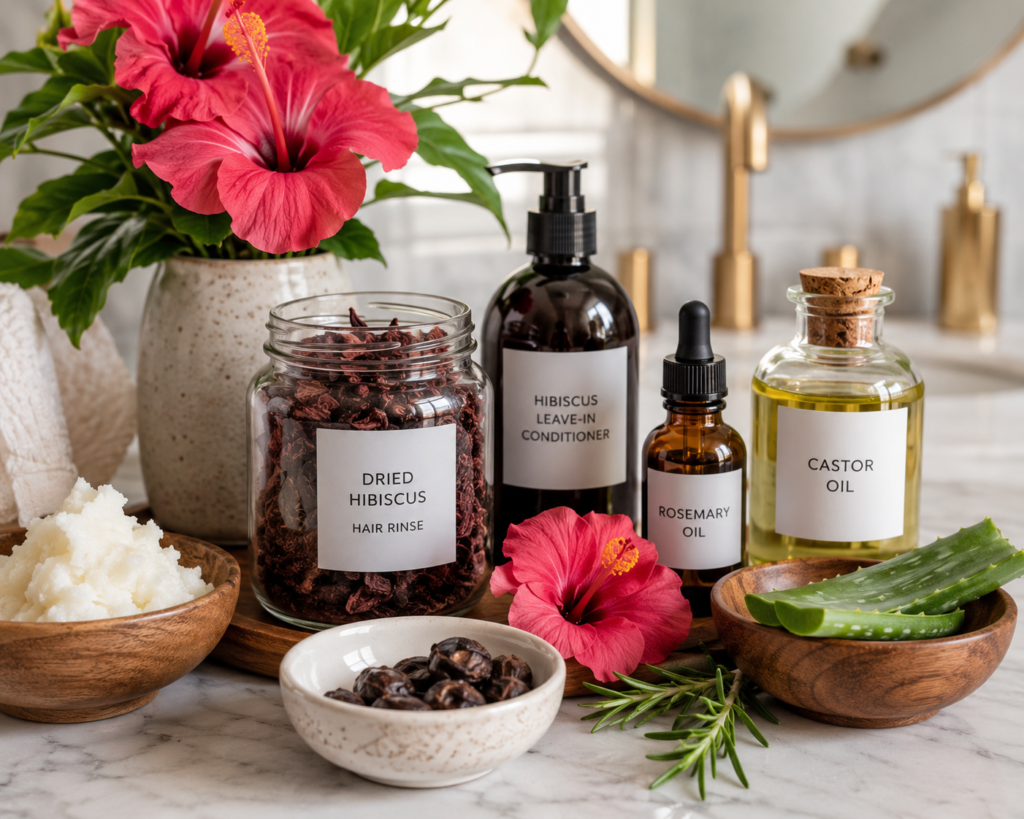
Hibiscus also pairs well with other natural hair ingredients such as aloe vera, fenugreek, marshmallow root, coconut milk, honey, and lightweight oils. The key is to use it in a way that complements your hair’s needs rather than overloading the strands.
Hibiscus for Natural Shine
One of the most loved benefits of hibiscus for hair is the glossy finish it can help encourage. When the hair cuticle looks smoother, light reflects more evenly, giving strands a shinier appearance. Hibiscus rinses and masks may help create that smoother look by coating the hair lightly and helping it feel softer after cleansing.
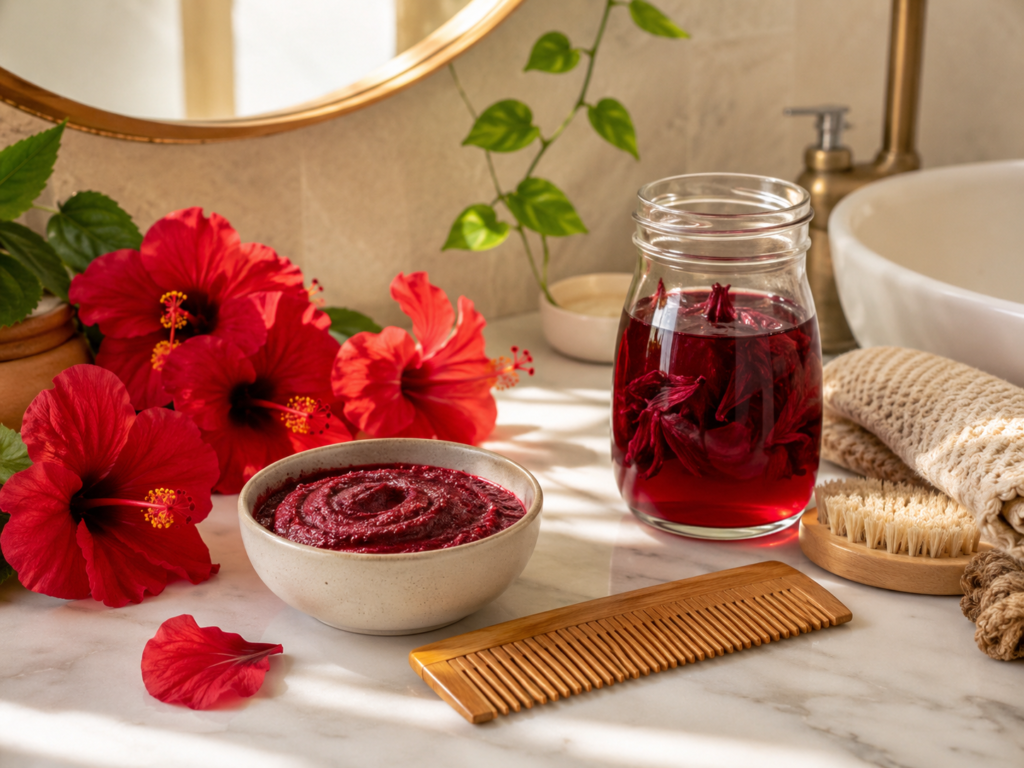
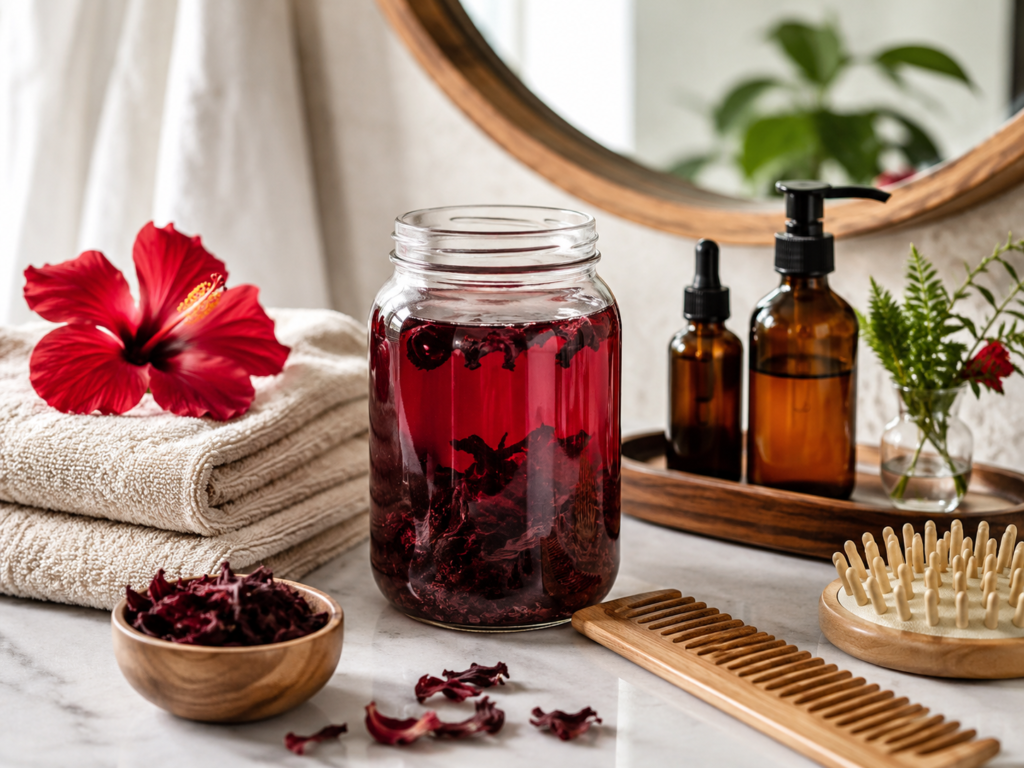
A simple hibiscus tea rinse is one of the easiest ways to try this benefit. Steep dried hibiscus flowers in hot water, let the tea cool completely, strain it, and pour it over freshly washed hair. Leave it on for several minutes before rinsing, or follow with conditioner if your hair needs extra moisture.
Because hibiscus has a rich red-purple pigment, people with very light, gray, or color-treated hair should patch test first. It may temporarily tint lighter strands, especially if left on for a long time.
Scalp Care Benefits of Hibiscus
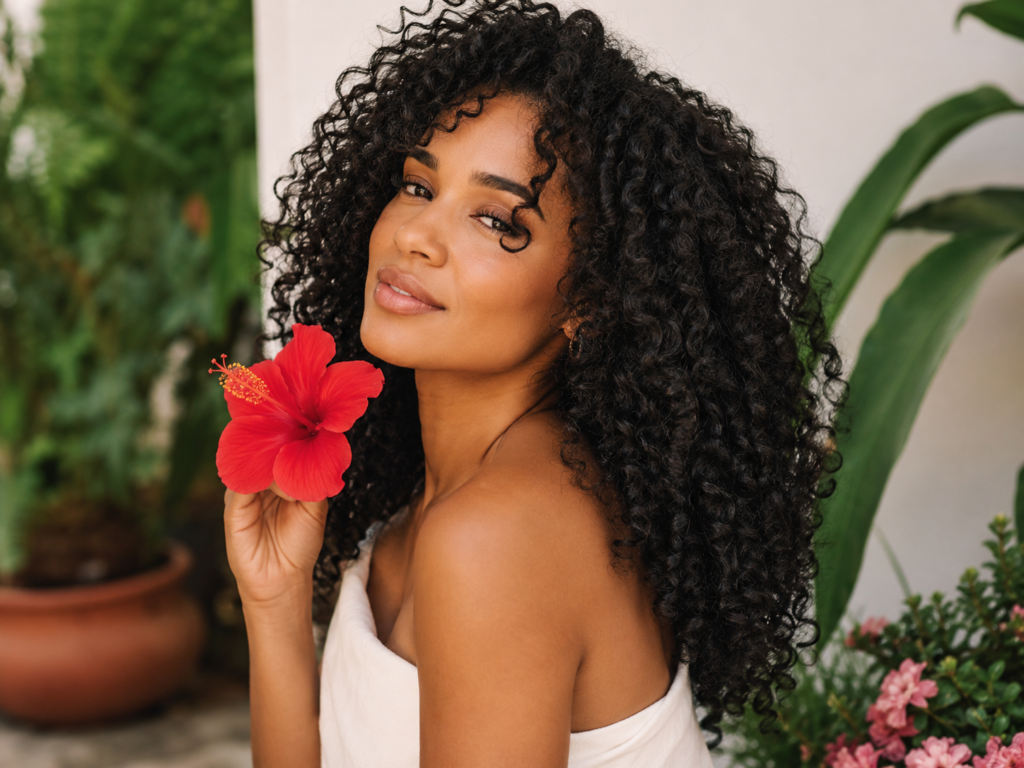
A healthy-looking head of hair starts with the scalp. Hibiscus can be used in scalp-focused routines because it feels soothing and refreshing when applied as a rinse or lightweight treatment. Its antioxidant-rich profile makes it a popular choice for people who want a more botanical approach to scalp care.
A hibiscus scalp rinse may be helpful after shampooing, especially for those who use styling products regularly. It can refresh the scalp, remove the feeling of buildup, and leave the hair smelling naturally floral and clean. For an extra calming blend, hibiscus tea can be combined with aloe vera juice or rose water.
That said, hibiscus should not replace medical care for scalp conditions such as persistent itching, flaking, irritation, or hair loss. If scalp discomfort continues, it is best to speak with a dermatologist or qualified healthcare professional.
Hibiscus for Softness and Manageability
Natural hair often thrives when it has the right balance of moisture, strength, and gentle handling. Hibiscus can support this balance by helping hair feel softer and easier to work with. Many DIY hair care lovers use hibiscus powder in masks because it creates a silky texture when mixed with water or aloe vera.
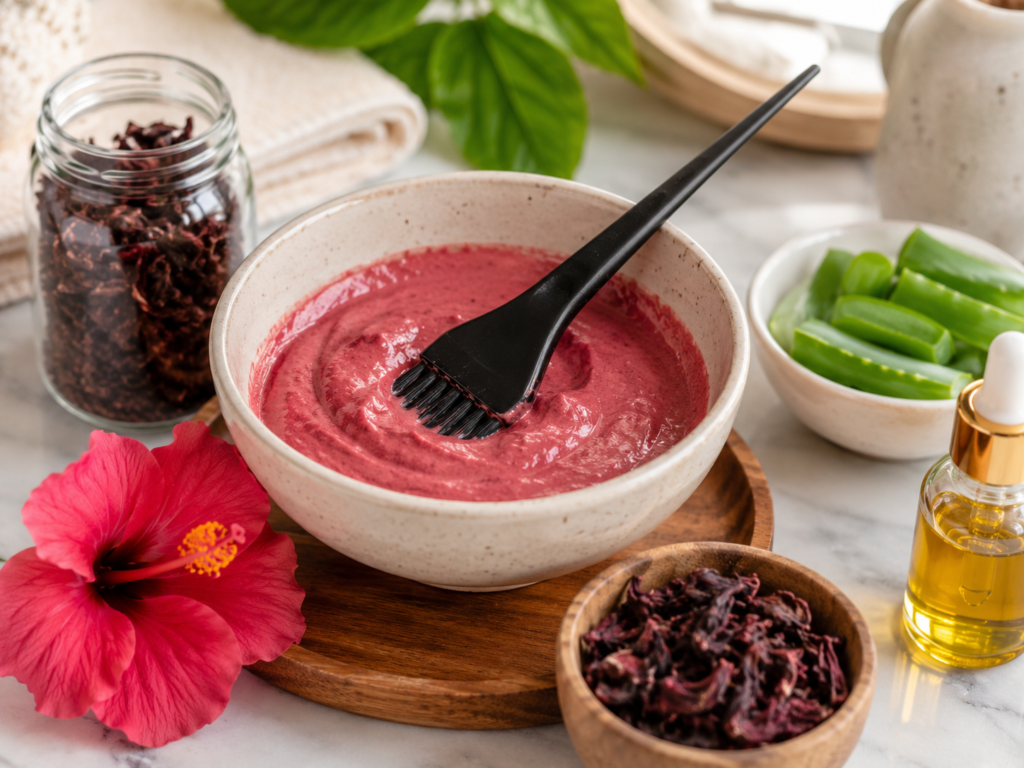
A basic hibiscus hair mask can be made by combining hibiscus powder with warm water, aloe vera gel, or conditioner until it forms a smooth paste. Apply it to damp hair in sections, cover with a shower cap, and leave it on for 15 to 30 minutes before rinsing thoroughly.
This type of mask may be especially useful before detangling or deep conditioning. The added slip can help reduce friction, which is important for minimizing breakage during wash day.
Everyday Ways to Use Hibiscus in Your Hair Routine
Hibiscus is versatile, so you can choose the method that best fits your routine. For a quick shine boost, try a hibiscus tea rinse once a week or every other wash day. For deeper softness, use a hibiscus mask before conditioning. For scalp care, apply cooled hibiscus tea directly to the scalp after shampooing and gently massage with your fingertips.
You can also make a hibiscus-infused oil by steeping dried hibiscus flowers in a carrier oil such as jojoba, olive, or grapeseed oil. This can be used sparingly on the scalp or applied to the ends of the hair to help seal in moisture. Use only a small amount, especially if your hair is fine or easily weighed down.
Another option is adding a small amount of hibiscus tea to a spray bottle with water and aloe vera juice. This can be misted lightly onto hair between wash days, but it should be stored in the refrigerator and used quickly since homemade water-based mixtures do not contain preservatives.
Tips for Getting the Best Results
Start slowly when introducing hibiscus into your routine. Even natural ingredients can cause sensitivity, buildup, or dryness if used too often. Do a patch test before applying hibiscus to your scalp, especially if you have sensitive skin.
Use hibiscus once a week or every two weeks at first, then adjust based on how your hair responds. If your strands feel coated or dry, reduce the frequency and follow with a moisturizing conditioner. If your hair feels soft, smooth, and refreshed, hibiscus may be a great long-term addition to your natural hair care routine.
Key Takeaways: Is Hibiscus Good for Natural Hair?
Hibiscus can be a beautiful, affordable, and easy-to-use ingredient for natural hair, shine, and scalp care. Its softening feel, botanical richness, and versatility make it a favorite for DIY rinses, masks, and scalp treatments.
The best results come from consistency and balance. Pair hibiscus with a gentle shampoo, moisturizing conditioner, protective styling habits, and regular scalp care. With the right approach, this vibrant flower can help your natural hair look glossier, feel softer, and stay easier to manage.