
Reading an ingredient list may not sound like the most inspiring part of your wellness routine, yet it is one of the kindest things you can do for yourself. Choosing a botanical supplement invites plants into your daily life that people have traditionally used for generations to support balance, rest, and gentle vitality. Knowing what is actually in the bottle helps you feel more grounded in that choice.
Many of us reach for herbal products hoping for simplicity, only to feel overwhelmed by long lists of Latin names, extracts, and fillers. The good news is that you do not need a degree in botany to read these labels with confidence. A little curiosity and a few steady habits can turn the process into a quiet act of self-care.
Why the Ingredient List Matters
Botanical supplements sit at the intersection of tradition and modern manufacturing. The plants themselves carry centuries of folk use, yet the way they are prepared, concentrated, and combined can vary widely. An ingredient list offers a transparent window into that process.
Looking closely helps you notice whether the product prioritizes whole-plant material or highly refined extracts. It also shows you what else has been added—binders, flow agents, or other supporting ingredients. This awareness supports more intentional choices that align with your personal approach to holistic living.
Start at the Top: The Order Tells a Story
Ingredients appear in descending order by weight. The first few items make up the largest portion of the formula. When you see a familiar herb listed near the top, you know it is present in meaningful amounts.
For example, if “organic ashwagandha root” appears first, the product centers that plant. If it appears near the bottom after a long list of other materials, the amount may be quite small. This simple observation already gives you useful context without requiring laboratory knowledge.
Common Terms You Will See
Botanical labels often use a mix of common and scientific names. Both can be helpful. The Latin binomial (such as Withania somnifera for ashwagandha) confirms the exact plant species. Seeing both the common name and the Latin name side by side builds clarity.
You may also notice words like “extract,” “powder,” “tincture,” or “standardized.”
- Whole herb powder usually means the dried plant material has been ground.
- Extract indicates the plant compounds have been concentrated, often with water, alcohol, or another solvent.
- Standardized extract means the manufacturer aims for a consistent level of one or more marker compounds.
None of these approaches is inherently better; they simply serve different purposes. Some people prefer the full spectrum of a whole plant, while others appreciate the consistency of a standardized extract. Your preference is personal and valid.
Supporting Ingredients and “Other” Sections
Near the end of the list you will often find “other ingredients.” These can include capsule materials (such as vegetable cellulose), anti-caking agents, or natural preservatives. Many people prefer formulas with shorter “other” lists, yet some supporting ingredients simply help the product remain stable and easy to take.
A practical tip: if a term is unfamiliar, pause and look it up from a trusted botanical reference rather than assuming the worst. Most common excipients used in quality supplements are well-documented and used in small amounts.
Everyday Examples and Gentle Clarifications
Imagine two bottles of a calming herbal blend. One lists “organic lemon balm leaf, organic passionflower herb, organic chamomile flower” as the first three ingredients. The other lists a long proprietary blend followed by “other ingredients” that take up more space than the herbs themselves. The first formula makes the botanical focus immediately clear.
A common misconception is that longer ingredient lists automatically mean lower quality. Length alone does not determine value. What matters more is transparency, the order of ingredients, and whether the plants you care about appear in meaningful positions.
Another frequent assumption is that “natural” on the front of a package guarantees purity. The ingredient list remains the more reliable place to look. Marketing language can be warm and inviting; the fine print tells the practical story.
Practical Ways to Build the Habit
You can begin applying this awareness right away:
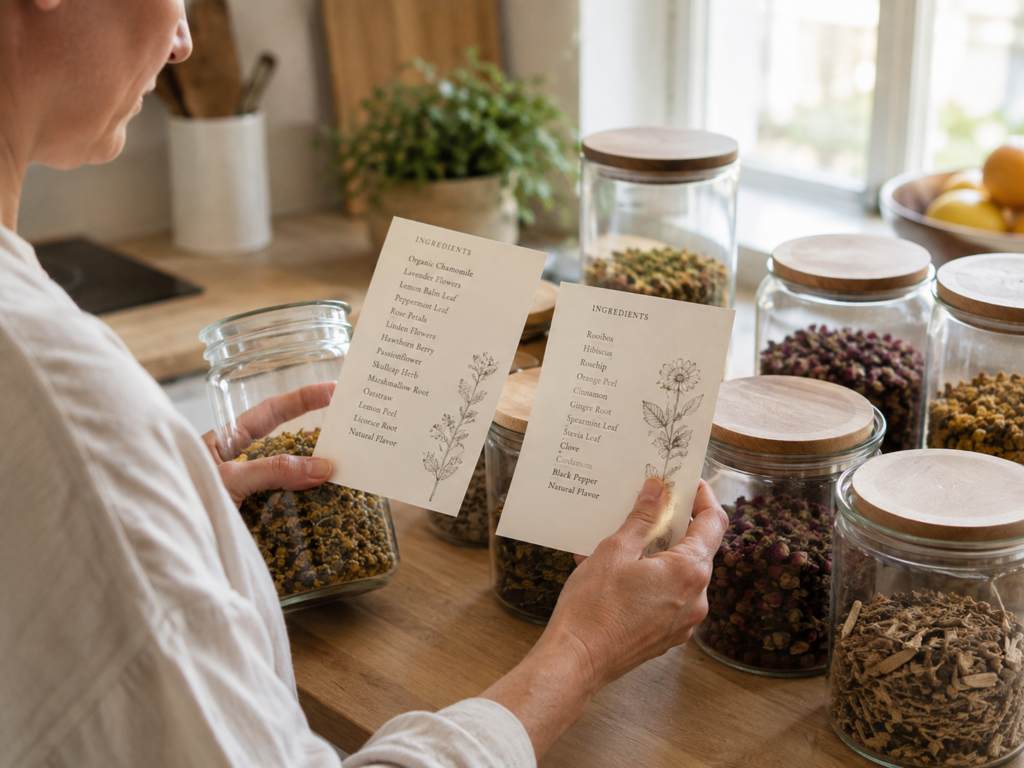
- Flip every new bottle over and read the full list before purchasing.
- Note the first three ingredients—they form the heart of the formula.
- Check for both common and Latin names when possible.
- Glance at the “other ingredients” section and notice its length.
- Keep a small notebook or phone note of plants that consistently feel supportive for you.
Over time these small checks become second nature, much like reading the weather before deciding what to wear. They turn shopping into a quiet ritual of care rather than a hurried decision.
Key Takeaways
- Ingredient order reveals relative amounts.
- Common and Latin names together increase clarity.
- “Extract,” “powder,” and “standardized” describe preparation methods, not automatic superiority.
- Shorter “other ingredients” lists often feel cleaner, yet context matters.
- Curiosity and consistency matter more than perfection.
Final Thoughts
Learning to read a botanical ingredient list is less about becoming an expert and more about deepening your relationship with the plants you invite into your life. Each time you pause to notice what is listed, you practice a form of mindful attention that extends beyond the bottle. Small, sustainable habits like these gently support a more grounded approach to natural wellness.
Remember that botanical supplements and herbal practices are meant to complement—not replace—professional medical advice. If you have specific health concerns or take medications, a conversation with a qualified healthcare provider remains the wisest next step.
May your choices feel clear, your rituals feel nourishing, and your daily path toward balance continue with quiet confidence.