
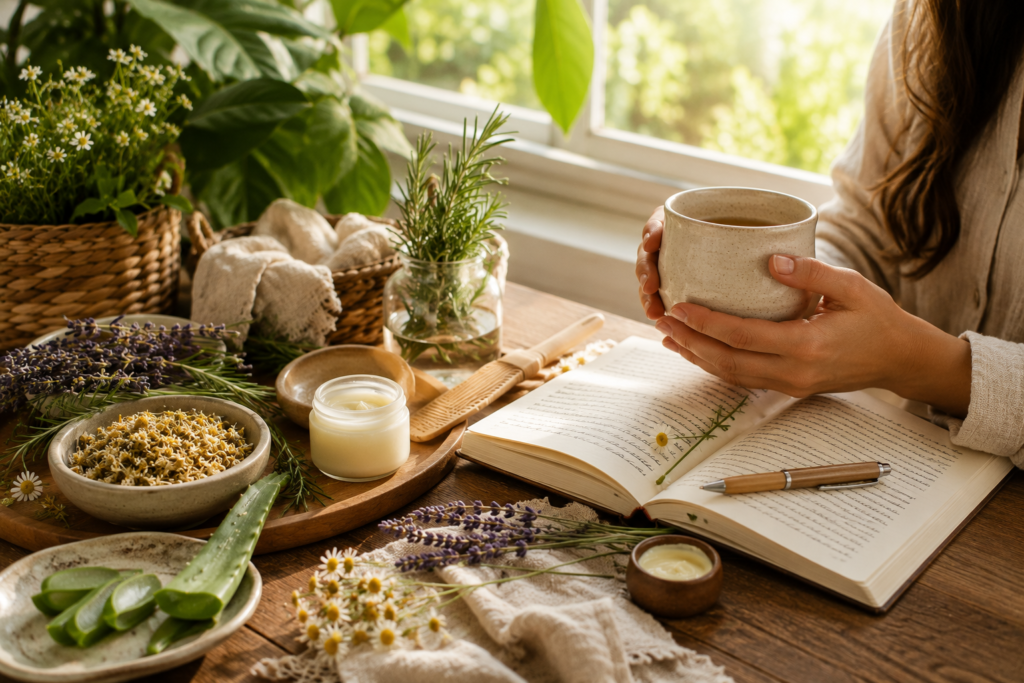
In today’s fast-paced world, self-care often feels like another task on an already busy to-do list. Yet some of the most meaningful wellness habits don’t require expensive equipment or hours of free time. They begin with simple moments—brewing a warm herbal tea, massaging tired hands with botanical oils, or taking a few quiet breaths surrounded by calming scents from nature.
Across many cultures, herbs have been traditionally used to support everyday well-being through gentle rituals that encourage rest, reflection, and connection. While modern science continues to explore the benefits of many botanicals, these traditions remind us that caring for ourselves isn’t always about doing more. Sometimes it’s about slowing down.
Herbal self-care isn’t intended to replace medical treatment or provide quick fixes. Instead, it offers an opportunity to create consistent, mindful habits that may support overall well-being alongside a balanced lifestyle.
Key Takeaways
- Herbal self-care focuses on creating intentional daily rituals.
- Small, consistent habits often feel more sustainable than elaborate routines.
- Many herbs have been traditionally used for relaxation, skincare, and overall wellness.
- Botanical practices work best alongside healthy nutrition, movement, quality sleep, and hydration.
- Natural wellness complements—not replaces—professional healthcare.
Begin the Day with a Herbal Morning Ritual
The first few minutes of your morning often set the tone for the rest of your day. Instead of immediately reaching for your phone, consider creating a simple botanical ritual.
A warm cup of herbal tea can provide a calming start while encouraging hydration. Herbs such as chamomile, ginger, peppermint, or lemon balm have been traditionally enjoyed as part of morning or evening wellness routines.
Pair your drink with a few deep breaths, gentle stretching, or five minutes of quiet journaling. These small practices can help promote mindfulness before the day becomes busy.
Try This
- Brew your favourite herbal infusion.
- Sit near natural light.
- Spend five minutes writing down three things you’re grateful for.
This routine takes less than ten minutes but may help create a calmer mindset.
Care for Your Skin with Botanical Rituals
Healthy skin care doesn’t always require complicated routines. Botanical ingredients have long been incorporated into gentle daily skincare rituals.
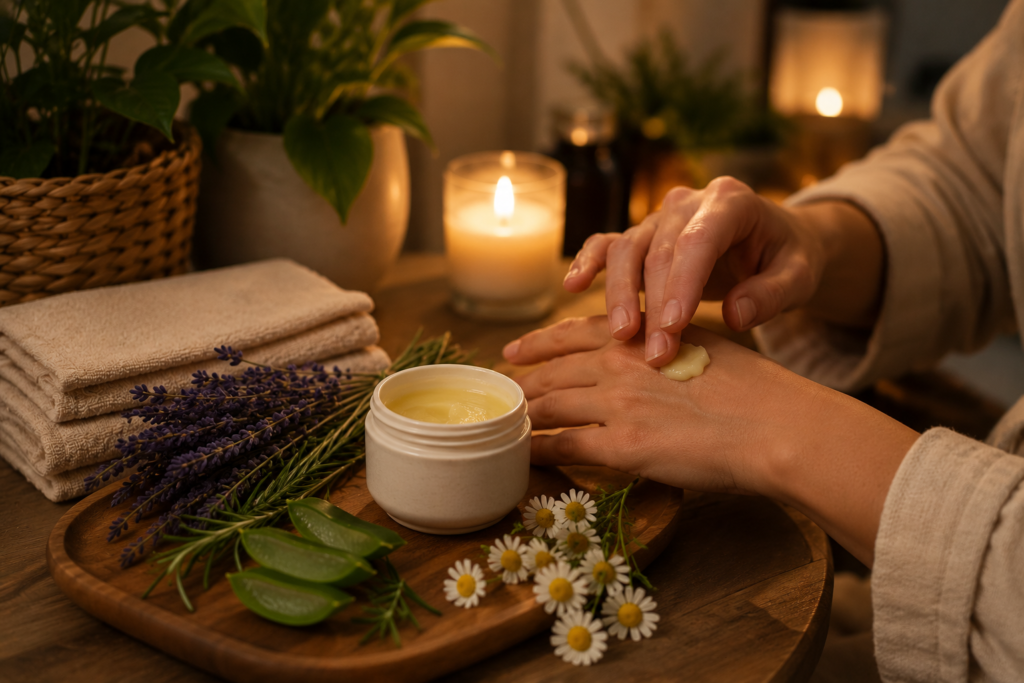
A nourishing botanical balm or natural plant oils may help support dry skin by creating a protective barrier that locks in moisture. Aloe vera, calendula, lavender, and chamomile have traditionally been valued for their soothing qualities in topical skincare.
Rather than rushing through your skincare routine, turn it into a mindful practice. Slow, gentle massage encourages you to pause while caring for yourself.
Refresh Your Hair Naturally
Hair care can also become a mindful botanical ritual.
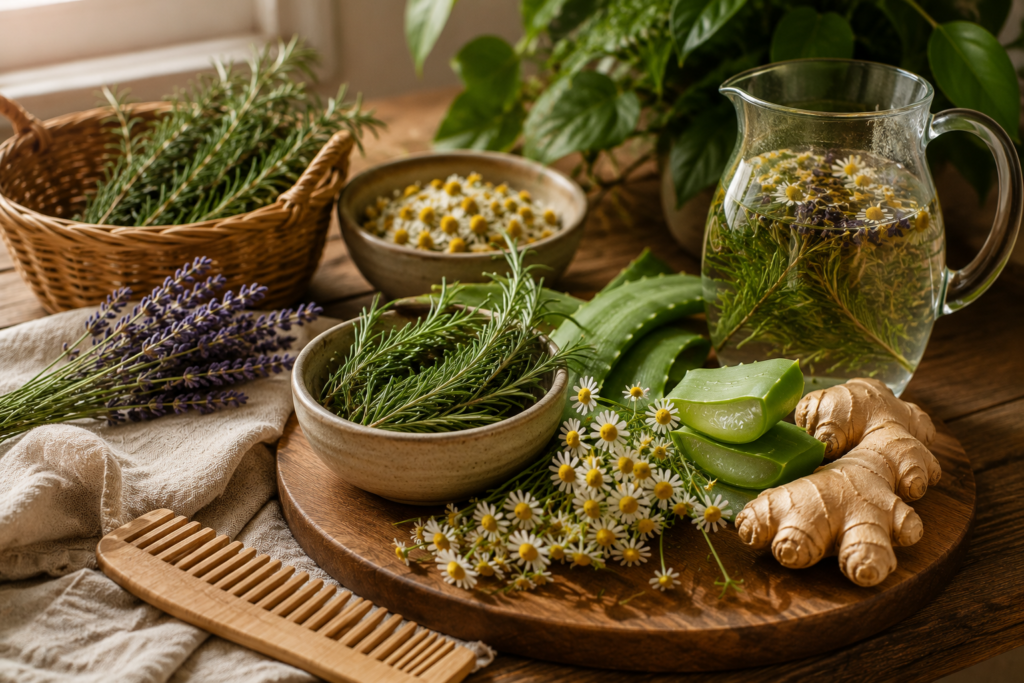
Many people enjoy herbal hair rinses made with botanicals traditionally used to support healthy-looking hair and scalp. Rosemary, chamomile, hibiscus, lavender, and nettle remain popular choices in natural hair care traditions.
Consistency is often more important than intensity. Gentle care over time may help support your overall hair care routine when combined with healthy nutrition and good scalp hygiene.
Common Misconception
Some people expect herbal hair care to produce dramatic overnight changes. In reality, botanical routines are generally appreciated for their gentle, gradual approach as part of ongoing self-care.
Create an Evening Wind-Down Routine
Evenings provide an opportunity to transition from a busy day into restful downtime.
A calming herbal ritual might include:
- Brewing a warm herbal tea
- Reading a few pages of a favourite book
- Gentle stretching
- Applying a botanical balm to hands or feet
- Reducing screen time before bed
These quiet moments may help promote relaxation and encourage a more restful evening routine.
Remember that wellness rituals don’t need to be perfect. Even ten mindful minutes can make a meaningful difference to how you feel.
Bring Nature Into Your Living Space
Your surroundings influence how you experience wellness.
Adding simple botanical elements to your home may help create a peaceful atmosphere. Fresh herbs, indoor plants, linen fabrics, natural wood textures, and soft lighting all contribute to an environment that encourages slowing down.
Even placing a small vase of fresh rosemary or lavender on your desk can serve as a gentle reminder to pause throughout the day.
Creating a calming space doesn’t require a complete home makeover—small touches often have the greatest impact.
Keep Herbal Self-Care Simple
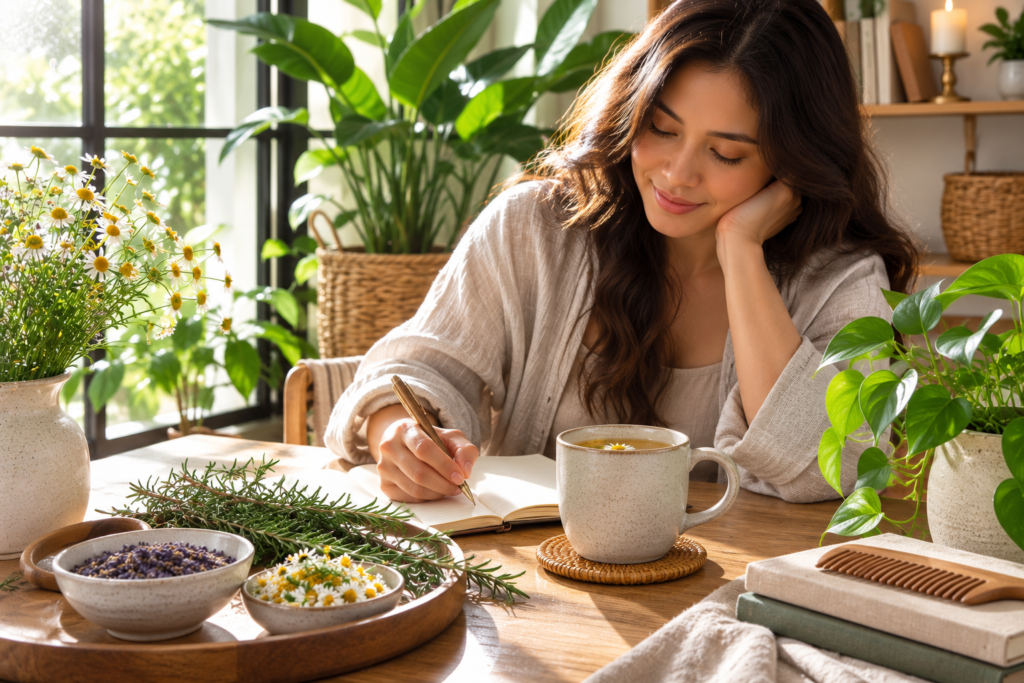
One of the biggest misconceptions about wellness is that it needs to be elaborate.
In reality, sustainable habits often begin with one small action repeated consistently.
A Gentle Daily Herbal Routine
Morning
- Drink a herbal infusion.
- Open a window for fresh air.
- Stretch for five minutes.
Afternoon
- Step outside for a mindful walk.
- Stay hydrated.
- Take a short screen break.
Evening
- Apply a nourishing botanical balm.
- Sip a warm herbal drink.
- Read or journal before bed.
When repeated consistently, these small rituals can help promote mindfulness and create moments of calm within everyday life.
Final Thoughts
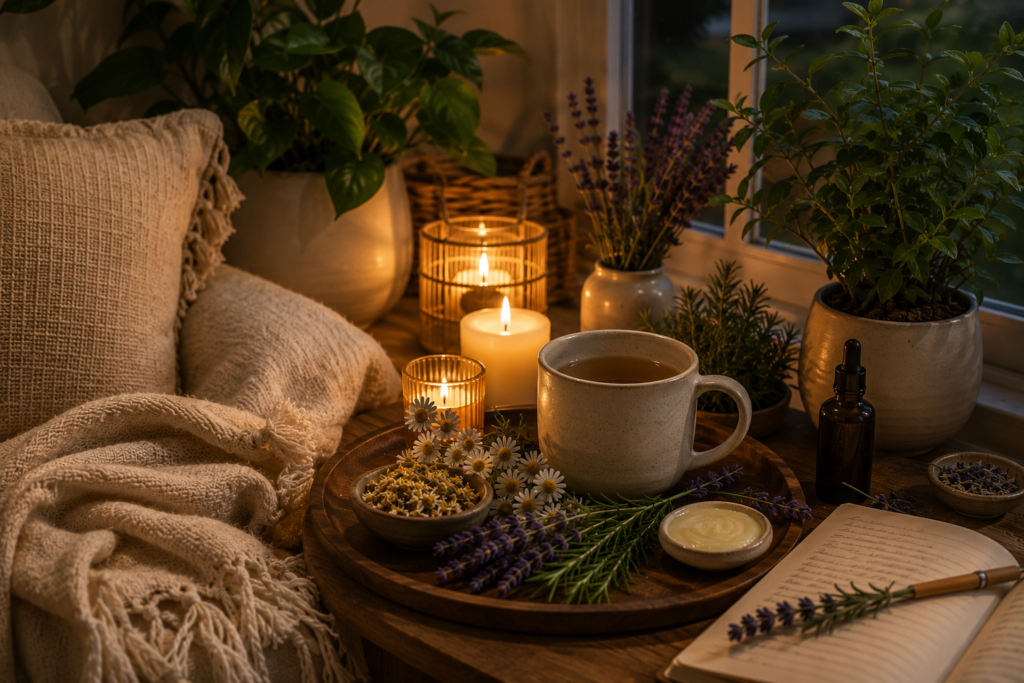
Herbal self-care is less about achieving perfection and more about creating meaningful moments of connection—with yourself, your surroundings, and the natural world. Whether you’re enjoying a comforting herbal tea, caring for your skin with botanical ingredients, or simply taking a few quiet moments to breathe deeply, these rituals can help promote balance and mindfulness in everyday life.
The beauty of botanical wellness lies in its simplicity. Small, sustainable habits are often easier to maintain than dramatic lifestyle changes, making them more likely to become lasting parts of your routine.
As you explore herbal self-care, remember that natural wellness works best alongside healthy lifestyle choices such as balanced nutrition, regular movement, quality sleep, and stress management. Herbs and botanical practices have been traditionally used for generations and may support overall well-being, but they should always complement—not replace—professional medical advice, diagnosis, or treatment.