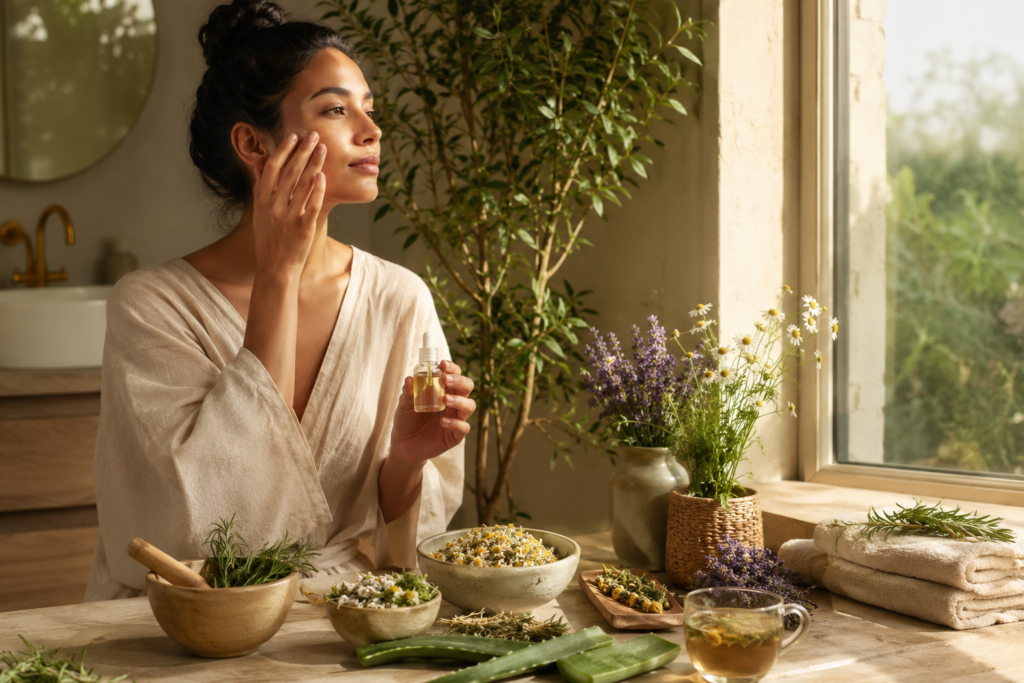
Modern beauty routines often promise quick transformations, encouraging us to chase flawless skin, shinier hair, or the latest trend. Yet many of the world’s oldest wellness traditions offer a gentler perspective. Rather than focusing on perfection, they invite us to slow down, connect with nature, and care for ourselves with purpose.
Beauty rituals rooted in nature and intention remind us that self-care isn’t about doing more—it’s about being more present. A warm cup of herbal tea before bedtime, a calming facial massage, or simply pausing to appreciate the scent of fresh herbs can become meaningful daily rituals that nourish both body and mind.
Across cultures, plants have been traditionally used to support healthy skin, hair, and overall wellbeing. While botanical ingredients aren’t miracle cures, they may support a holistic approach to self-care when paired with healthy lifestyle habits and consistency. The beauty of these rituals lies not only in what we apply, but also in how intentionally we care for ourselves.
Key Takeaways
- Beauty rituals begin with intention rather than perfection.
- Nature provides botanical ingredients that have been traditionally used in holistic beauty practices.
- Small daily habits often create more lasting wellbeing than complicated routines.
- Mindfulness transforms ordinary self-care into meaningful moments of restoration.
- Consistency and gentle care are the foundation of sustainable beauty rituals.
Why Intention Matters in Beauty Rituals
A beauty ritual becomes meaningful when it begins with awareness.
Instead of rushing through your skincare routine while thinking about tomorrow’s to-do list, imagine taking just a few moments to slow your breathing, notice how your body feels, and appreciate the process itself.
Intention transforms routine into ritual.
It encourages us to ask simple questions:
- How am I feeling today?
- What does my body need right now?
- How can I create a few peaceful moments for myself?
These mindful pauses may help reduce stress and encourage a greater sense of balance throughout the day. Over time, they also help build consistent habits that feel restorative rather than overwhelming.
Nature’s Role in Everyday Beauty
For generations, botanical ingredients have played an important role in traditional beauty practices around the world. Many people continue to appreciate herbs not only for their natural qualities but also for the calming rituals they inspire.
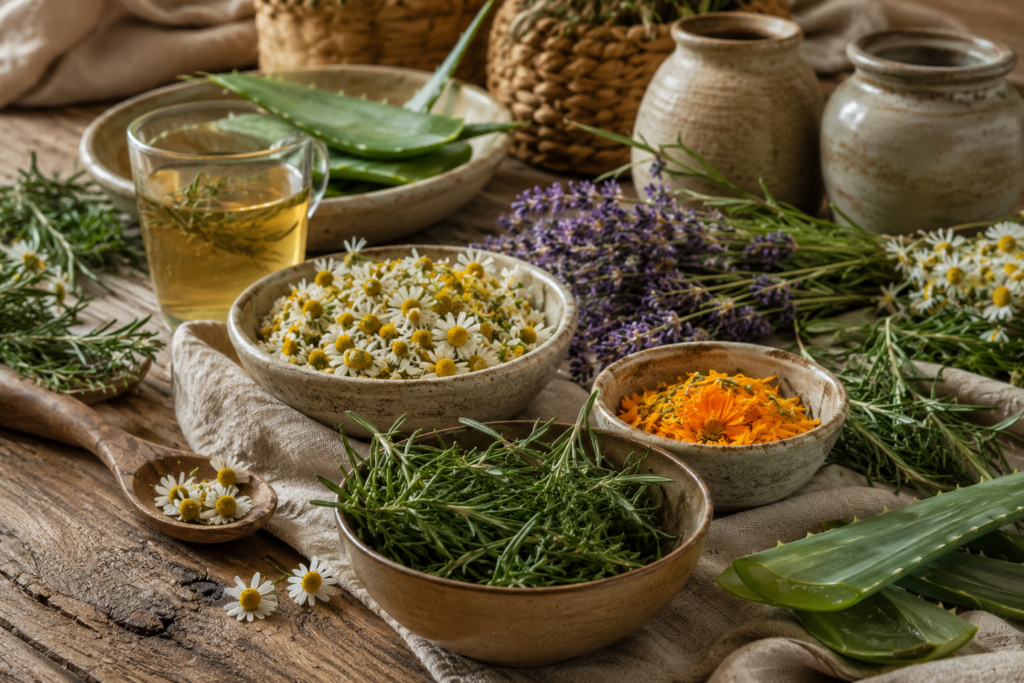
Herbs Traditionally Used in Beauty Rituals
Several botanicals have long been incorporated into holistic self-care routines:
- Chamomile is traditionally used for its gentle, calming properties and may help promote relaxation during evening rituals.
- Rosemary has been traditionally used in hair and scalp care and may support a refreshed feeling when included in regular routines.
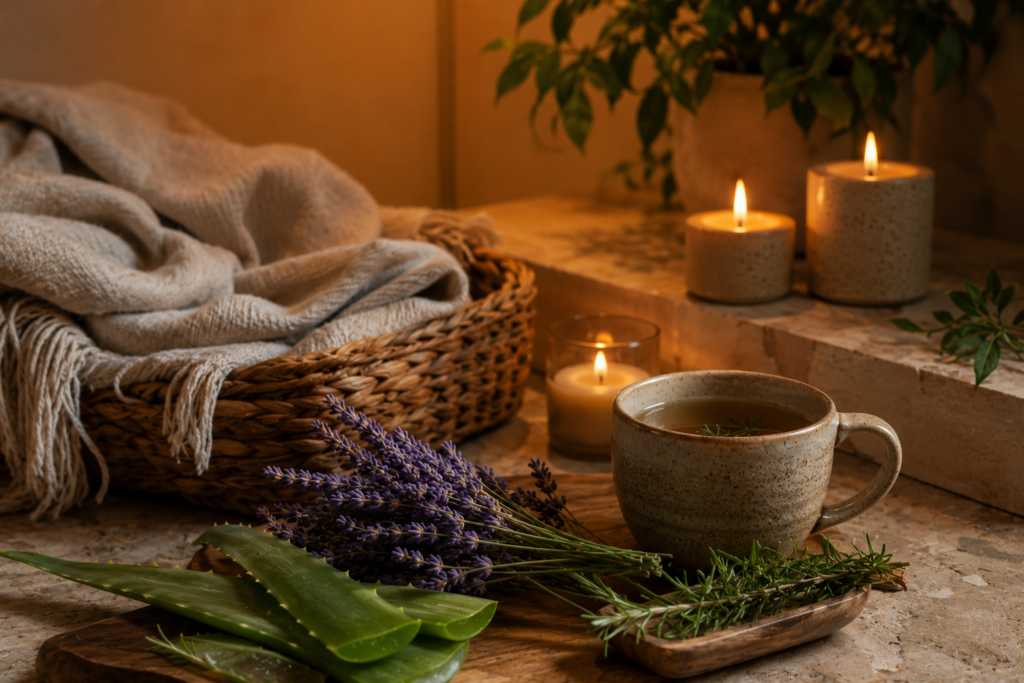
- Lavender is well known for its soothing aroma, which can help create a peaceful atmosphere.
- Aloe vera has traditionally been used to help soothe and hydrate dry skin.
- Calendula has a long history of traditional use in botanical skincare because of its gentle nature.
Rather than relying on a single ingredient, many people find that a combination of mindful habits, nourishing foods, adequate rest, and botanical self-care creates a more balanced approach to wellbeing.
Turning Everyday Habits into Mindful Rituals
The most meaningful beauty rituals are often surprisingly simple.
You don’t need an elaborate routine or dozens of products to experience the benefits of slowing down.
Create a Peaceful Space
Choose one small area of your home where your beauty routine feels calm and inviting.
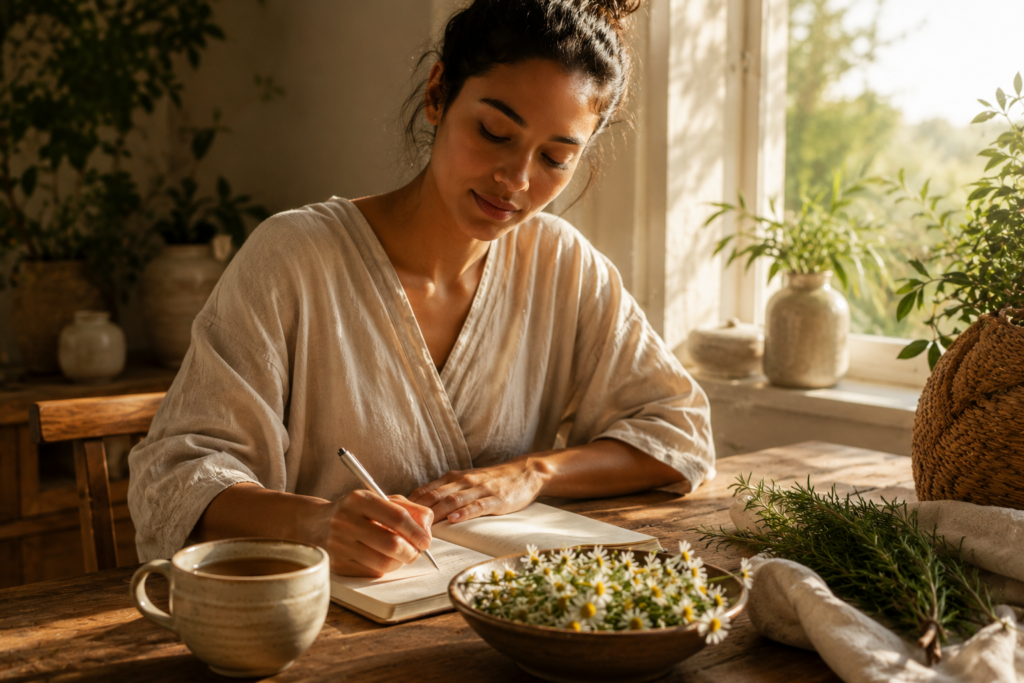
Natural light, fresh greenery, linen towels, ceramic bowls, or a cup of herbal tea can transform an ordinary space into a relaxing sanctuary.
Slow Down Your Application
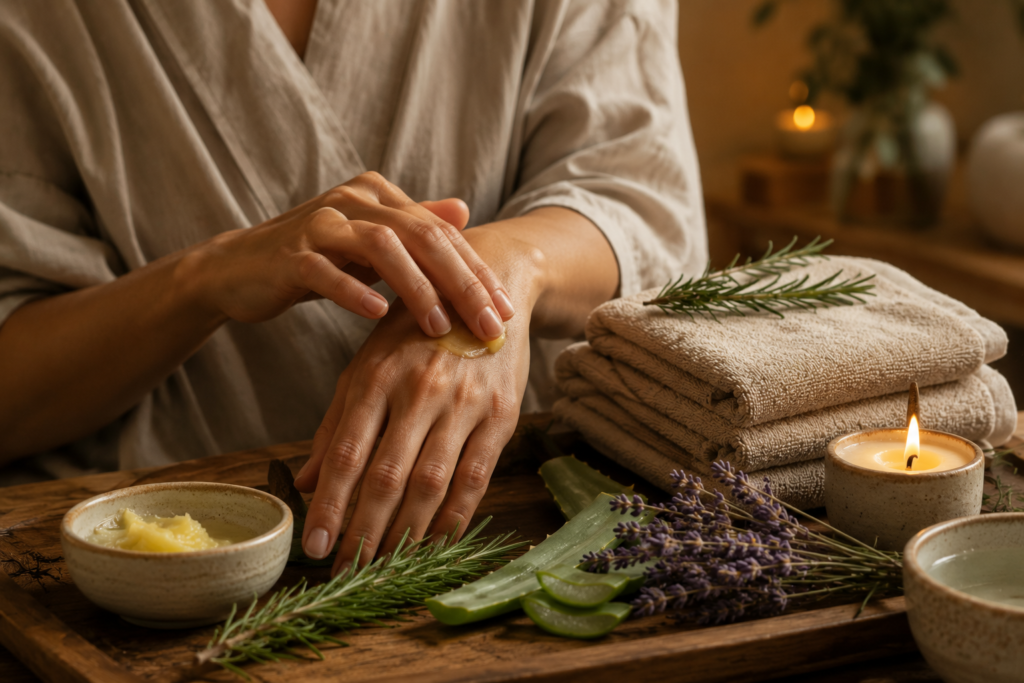
Instead of rushing, gently massage your face, hands, or scalp while paying attention to your breathing.
Gentle massage may help promote circulation while also encouraging relaxation after a busy day.
Engage Your Senses
Notice the scent of herbs, the warmth of your tea, or the softness of a towel.
Being fully present allows everyday moments to become grounding experiences that support emotional wellbeing alongside physical care.
Common Misconceptions About Natural Beauty
Natural beauty rituals are sometimes misunderstood.
Myth: More Products Equal Better Results
Consistency often matters more than quantity.
A simple routine followed regularly is usually easier to maintain than an overly complicated regimen.
Myth: Natural Means Instant Results
Botanical self-care is about gradual support rather than overnight transformation.
Healthy habits often develop through patience and consistency.
Myth: Self-Care Is Selfish
Taking a few quiet moments to care for yourself allows you to recharge so you can show up more fully for your family, work, and community.
Self-care is not indulgence—it is an investment in your overall wellbeing.
Practical Botanical Beauty Rituals to Try
If you’re new to intentional beauty practices, start small.
Morning Mindfulness
Before checking your phone:
- Drink a glass of water.
- Open a window for fresh air.
- Take three slow, deep breaths.
- Apply your skincare slowly with gentle massage.
Afternoon Reset
Brew a warm herbal tea.
Stretch your shoulders, relax your jaw, and spend a few quiet moments away from screens.
Evening Wind-Down
Dim the lights, enjoy calming herbal tea, write a few lines in a journal, and create a peaceful bedtime routine.
These simple practices may help promote relaxation while encouraging greater consistency in your self-care habits.
Final Thoughts
Beauty rituals rooted in nature and intention invite us to redefine what beauty truly means. Instead of chasing impossible standards, we can cultivate daily habits that help us feel calmer, more connected, and more present in our own lives.
Whether it’s preparing a cup of herbal tea, taking a mindful walk outdoors, gently caring for your skin, or simply pausing to breathe, these small rituals can become powerful reminders to slow down and listen to your body.
Natural wellness is a journey rather than a destination. By embracing simple, sustainable practices inspired by nature, we create space for self-care that supports both inner and outer wellbeing.
Please remember: Natural wellness practices may complement your overall health and beauty routine, but they are not a substitute for professional medical advice, diagnosis, or treatment. If you have concerns about your skin, hair, or overall health, consult a qualified healthcare professional.