Have you ever used your favorite hair product and noticed that it didn’t feel quite the same as last time?
Maybe your curls looked more defined on one day.
Another time, the same amount of product felt heavy.
Or perhaps your hair seemed easier to detangle when you applied it after washing.
The formula may not have changed at all.
The difference could be how much water was present in your hair.
When exploring all natural hair products, it’s easy to focus on ingredients while overlooking application conditions.
But whether your hair is soaking wet, lightly damp, or completely dry can influence how a product spreads and feels.
Understanding these differences can help make your everyday botanical hair-care routine more predictable.
Why Water Changes the Application Experience
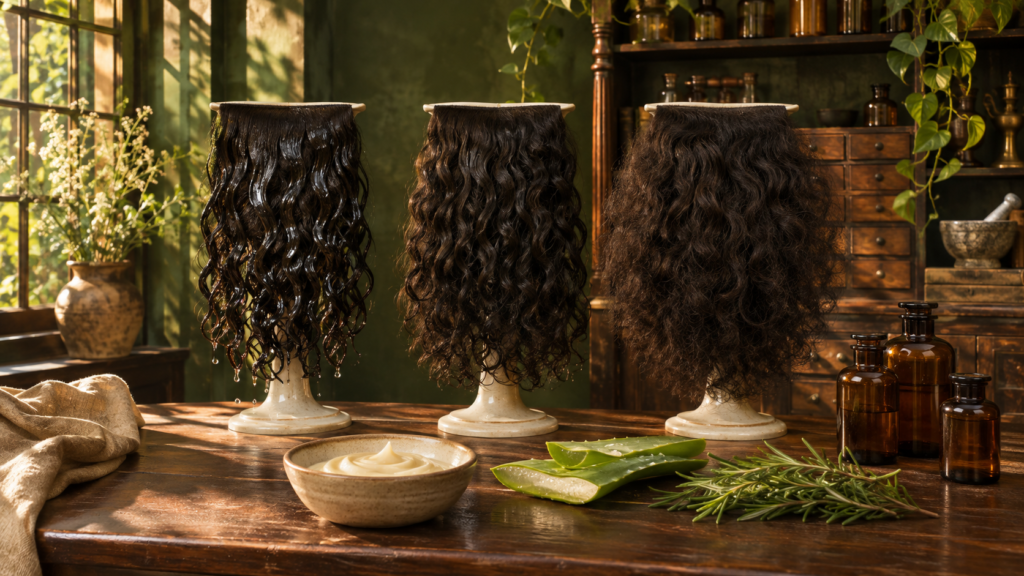
Hair behaves differently depending on how much water it contains.
When hair is wet, water is present on and within the strands.
This can affect flexibility, friction, and how hair groups together.
Some products spread more easily when there’s water available to help distribute them.
Others may become overly diluted or feel less concentrated when applied to very wet hair.
On dry hair, a product may stay more localized where it is applied.
These differences depend on the formula, hair characteristics, and amount used.
There isn’t one application method that works best for every product.
Applying Hair Products to Soaking-Wet Hair
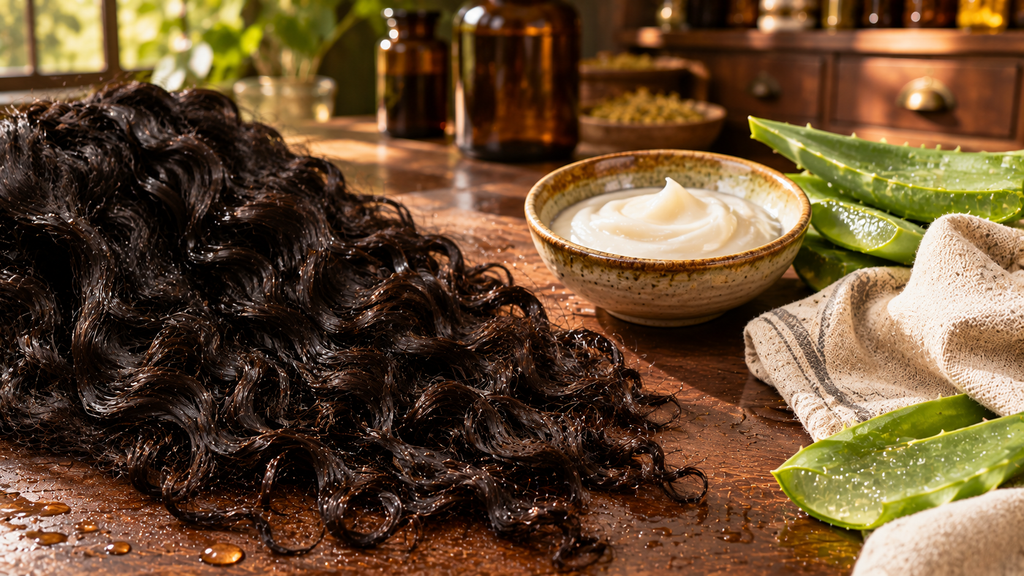
Soaking-wet hair is often associated with wash-day styling.
At this stage, the hair contains substantial water and may form visible curl or wave groupings.
Some leave-in conditioners and styling products are designed to work well under these conditions.
Water can help certain formulas distribute through the hair.
However, applying too much product to very wet hair may create an unexpectedly heavy result.
It can also make it harder to judge how much product remains after drying.
Always follow the directions for the specific product.
Damp Hair Offers a Different Balance
Damp hair contains moisture but isn’t dripping wet.
For some people, this creates a convenient middle ground for applying leave-in products.
There’s enough water to help with distribution, but not so much that the product feels excessively diluted.
Damp hair may also make it easier to notice how much product you’re applying.
This can be useful when working with richer creams or leave-in conditioners.
However, dampness alone doesn’t determine whether a product will work well.
Hair density, strand thickness, porosity, previous products, and formulation all influence the result.
The most reliable starting point is the manufacturer’s recommended application method.
What Happens When You Apply Hair Products to Dry Hair?
Dry hair presents a different application experience.
Without additional surface water, some products may feel more concentrated.
Rich oils and balms can remain noticeable on the hair, particularly when used in larger amounts.
That doesn’t necessarily mean they’re unsuitable.
Certain finishing products are specifically designed for dry hair.
They may help reduce friction, add shine, or improve the appearance of flyaway.
But a product intended for wet hair may not distribute as easily when applied dry.
Rather than assuming the formula is ineffective, check whether you’re using it under the intended conditions.
Oils and Water Play Different Roles
A common misconception is that applying oil automatically adds moisture to hair.
Water and oils serve different functions.
Water contributes directly to hair hydration.
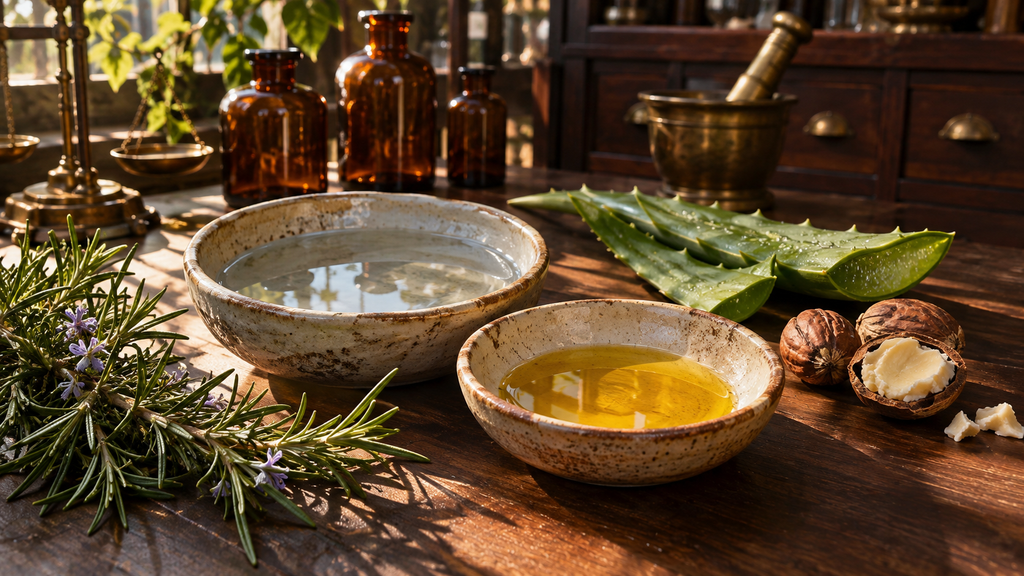
Oils may help lubricate strands, influence surface feel, and reduce friction.
Some oil-based formulations can also affect how water moves through the hair.
However, an oil doesn’t supply water simply because it makes hair feel smoother.
This distinction is especially useful when choosing botanical hair-care products.
A formula that contains oils, conditioning ingredients, and water may behave differently from a product made primarily with oils.
Hair Texture Influences Product Distribution
Not all hair responds to application in the same way.
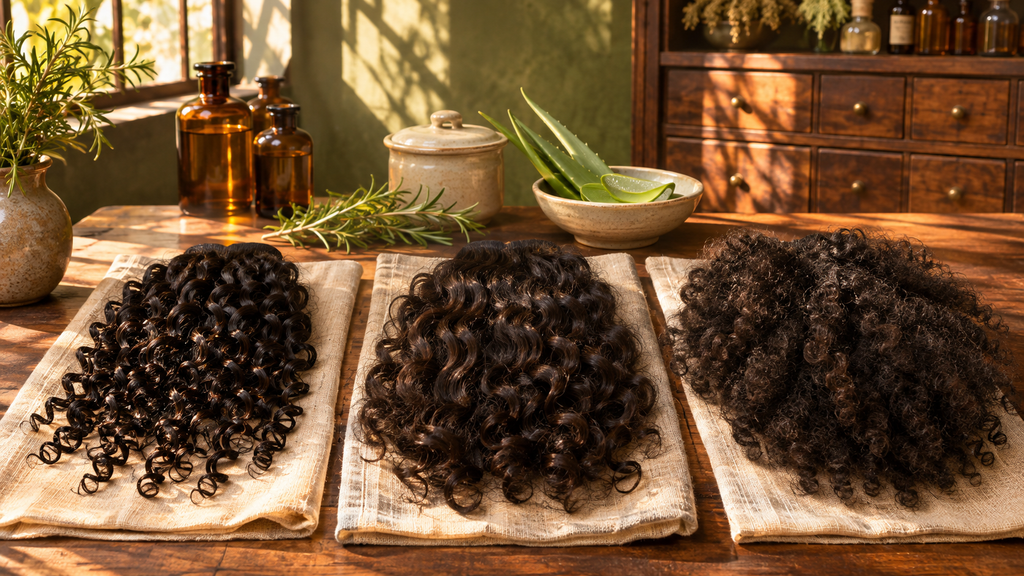
Straight, wavy, curly, and coily hair have different physical characteristics.
Hair density and strand thickness can also influence how easily a product spreads.
For example, tightly coiled hair may require careful sectioning to distribute certain products evenly.
Fine hair may feel weighed down by a rich formula used in excessive amounts.
Thicker strands may respond differently to the same quantity.
These are general considerations, not fixed rules.
Individual hair characteristics matter more than broad assumptions based on curl pattern alone.
Why Hair Product Amount Matters as Much as Dampness
Even when you choose an appropriate application method, the amount of product can influence the result.
Applying too much may leave hair feeling coated or heavy.
Applying too little may make distribution uneven.
Start with the quantity recommended on the product label.
If the directions allow adjustment, increase gradually rather than applying a large amount immediately.
Sectioning can also help distribute products more consistently, particularly through dense or textured hair.
The goal isn’t to use as much product as possible.
It’s to use an appropriate amount for the hair and the formulation.
A Simple Way to Compare Application Methods
If a product’s directions allow use on both damp and dry hair, you can observe how the application experience differs.
Try using a consistent amount on a small section of hair.
Notice how easily it spreads.
Pay attention to how the hair feels after drying.
Does it feel coated?
Does the product distribute evenly?
Does the finished result suit your preferences?
Avoid experimenting with application methods that contradict the manufacturer’s instructions.
A small, controlled comparison can be more useful than changing several parts of your routine at once.
When Your Hair Doesn’t Feel the Same Every Day
Water isn’t the only factor influencing your hair-care experience.
Weather, previous styling products, washing frequency, and mechanical handling can all affect how hair feels.
Humidity may influence the behavior of some hair fibers and styling formulations.
Product buildup can also change how a new application feels.
That’s why one disappointing result doesn’t necessarily mean a product is unsuitable.
Before replacing it, consider whether your application conditions were different.
Did you use it on wetter hair?
Was the amount larger than usual?
Did you combine it with another product?
These small details can help explain changes in the finished result.
Don’t Confuse Product Feel With Hair Health
A product may make hair feel immediately smoother or softer.
That sensory improvement can be useful, but it doesn’t automatically establish long-term improvements in hair health.
Likewise, a product that feels lightweight isn’t necessarily ineffective.
Different formulations are designed for different purposes.
Conditioning, cleansing, styling, and finishing products should be evaluated according to what they’re intended to do.
When choosing all natural hair products, consider the complete formulation, appropriate use, and your individual needs rather than relying on texture alone.
Key Takeaways
- Hair products can feel different depending on whether hair is wet, damp, or dry.
- Water may help distribute certain leave-in and styling formulas.
- Soaking-wet hair isn’t automatically the best application condition.
- Damp hair can offer a practical balance for some products.
- Certain finishing products are specifically intended for dry hair.
- Oils and water play different roles in hair care.
- Hair density, strand thickness, and curl pattern influence application.
- Product quantity affects distribution and finished texture.
- Always follow the manufacturer’s recommended application method.
- A product’s immediate feel doesn’t necessarily indicate its long-term effect on hair health.
Final Thoughts
The next time your favorite hair product feels different, consider how much water was in your hair when you applied it.
A small change in application conditions can influence how a formula spreads, feels, and finishes.
Understanding these differences can help you make more informed choices without constantly replacing products.
Thoughtful botanical hair care isn’t about finding one universal method.
It’s about learning what works for your hair while respecting how each product was designed to be used.
Explore natural hair care and botanical personal-care essentials with a practical approach to application, comfort, and everyday hair maintenance.