
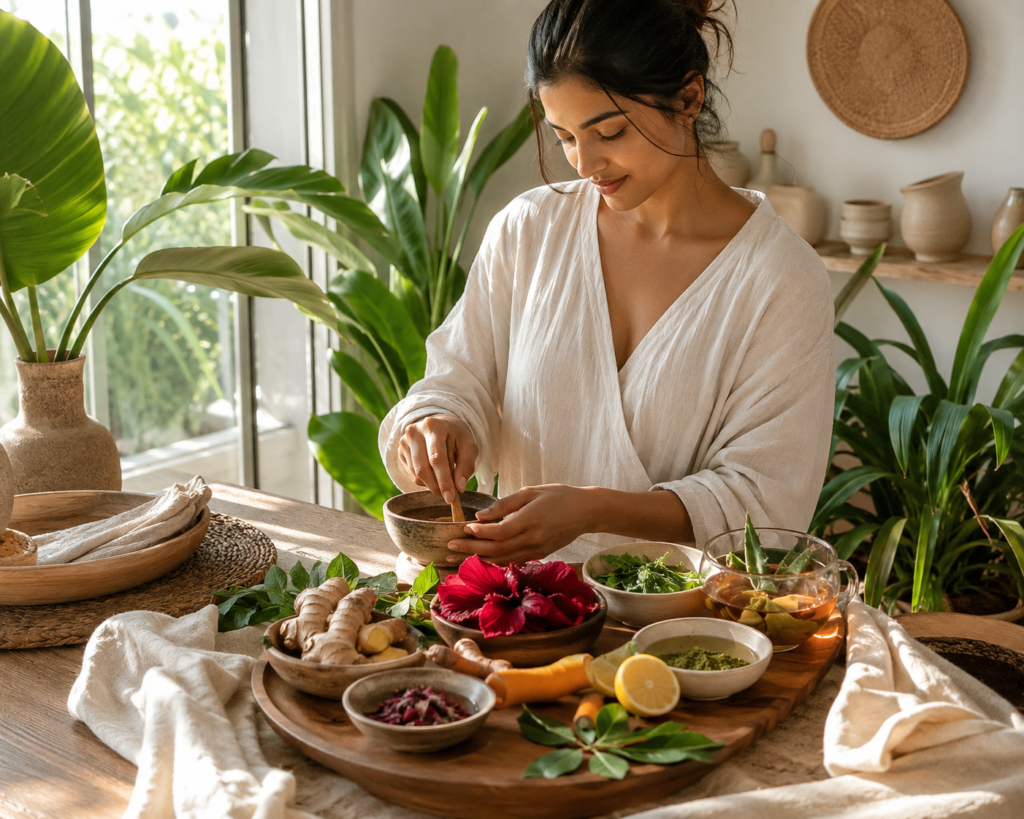
Modern life often moves at a fast pace, making it easy to overlook simple habits that help us feel balanced and refreshed. While self-care is frequently associated with luxury treatments or lengthy routines, it can also be rooted in small, intentional practices inspired by nature.
Herbal self-care invites us to reconnect with botanical traditions that have supported wellbeing for generations. From nourishing the skin and caring for the hair to encouraging everyday vitality, herbs may offer gentle support as part of a balanced lifestyle. Combined with healthy nutrition, movement, hydration, quality sleep, and mindful routines, these natural practices can help create moments of restoration throughout the day.
Rather than striving for perfection, holistic wellness encourages consistency. Even a few mindful rituals each week can become meaningful investments in your overall wellbeing.
Key Takeaways
- Herbal self-care focuses on gentle, everyday wellness habits.
- Botanical ingredients may support healthy skin, hair, and overall vitality.
- Consistency often matters more than complexity.
- Wellness rituals work best alongside healthy lifestyle choices.
- Natural approaches complement—not replace—professional medical care.
Creating a Botanical Foundation for Everyday Wellness
Nature offers a remarkable variety of herbs that have long been associated with personal care and traditional wellness practices. While every individual responds differently, incorporating botanical rituals into your routine can encourage moments of mindfulness and relaxation.
Instead of trying multiple new products or habits at once, begin with one or two simple practices that feel sustainable.
Wellness Starts with Small Daily Rituals
Simple habits may include:
- Preparing a calming herbal tea
- Taking a few minutes for mindful breathing
- Massaging botanical oils into dry skin
- Brushing or gently caring for your hair
- Spending quiet time away from digital distractions
These small moments often become easier to maintain than dramatic lifestyle changes.
Supporting Healthy Skin Through Herbal Self-Care
Healthy-looking skin reflects many aspects of overall wellbeing, including hydration, nutrition, sleep, and environmental factors. Botanical skincare can become a soothing part of a balanced routine.
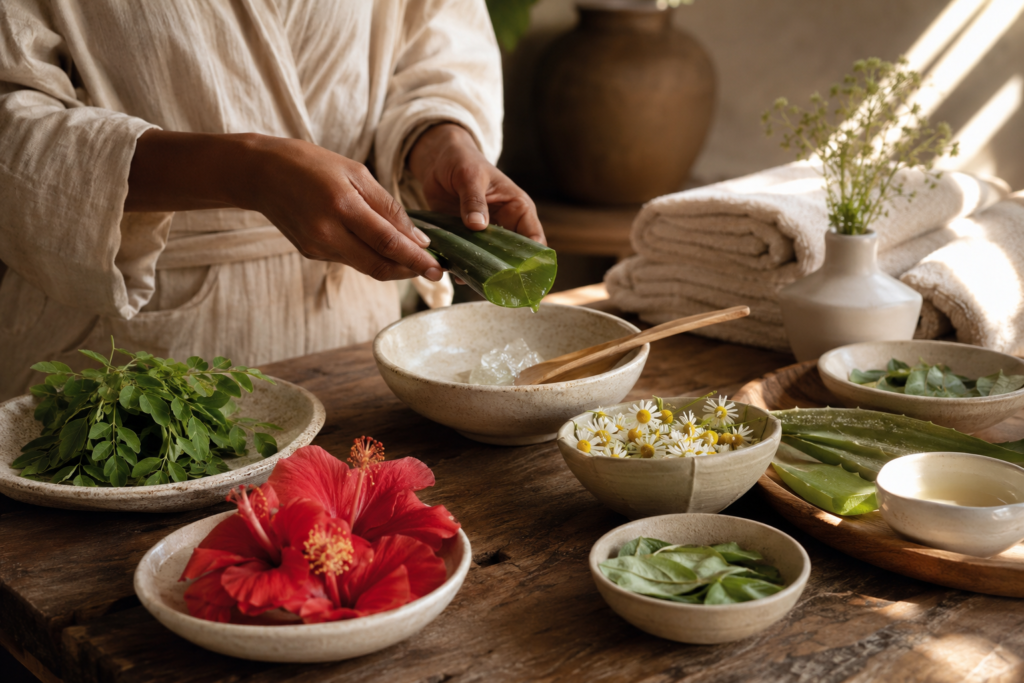
Herbs traditionally associated with skin wellness include:
- Aloe vera for hydration
- Calendula for gentle skin comfort
- Chamomile for calming rituals
- Hibiscus for antioxidant-rich botanical care
- Moringa for nourishing plant compounds
Rather than expecting overnight transformations, consistent care may help support your skin’s natural barrier and overall appearance over time.
Caring for Hair Naturally
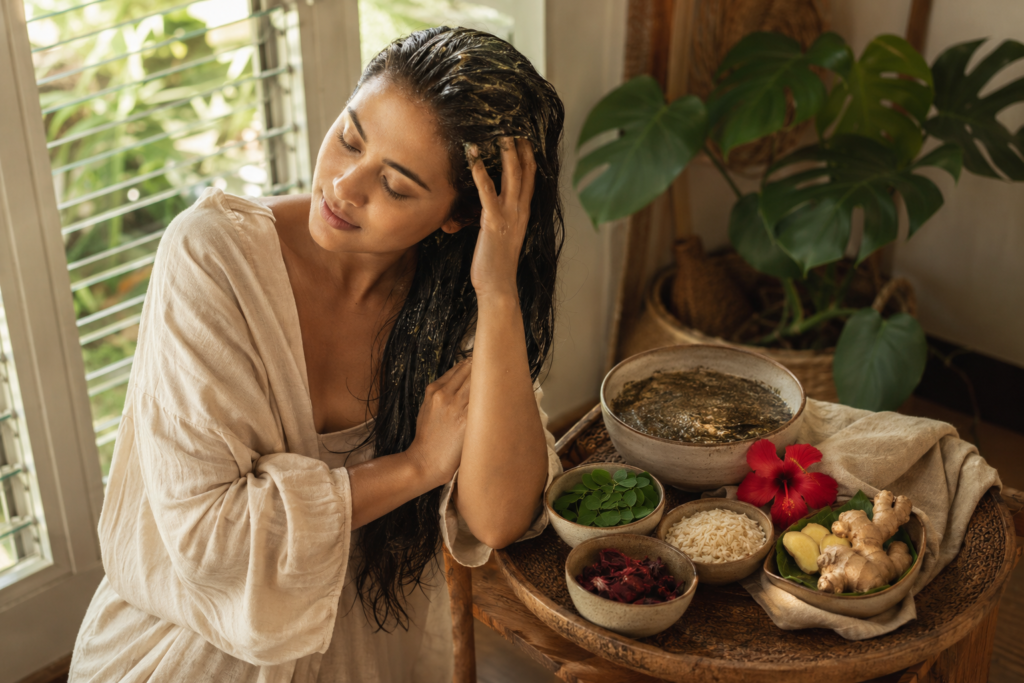
Hair wellness is influenced by many factors, including nutrition, genetics, stress, and everyday hair care habits. Herbal traditions often emphasize gentle nourishment rather than harsh treatments.
Botanicals such as rosemary, hibiscus, ginger, moringa, and rice-based herbal preparations have traditionally been used in various cultures to support healthy-looking hair and scalp care.
Alongside herbal routines, remember to:
- Avoid excessive heat styling.
- Stay hydrated.
- Eat a balanced diet rich in nutrients.
- Protect hair from excessive sun exposure.
- Massage the scalp gently during washing.
These simple habits can help promote healthier hair over time.
Herbs That May Support Everyday Vitality
Vitality isn’t simply about having more energy—it also includes feeling balanced, focused, and resilient throughout daily life.
Many traditional wellness practices include herbs that are often associated with supporting overall wellbeing.
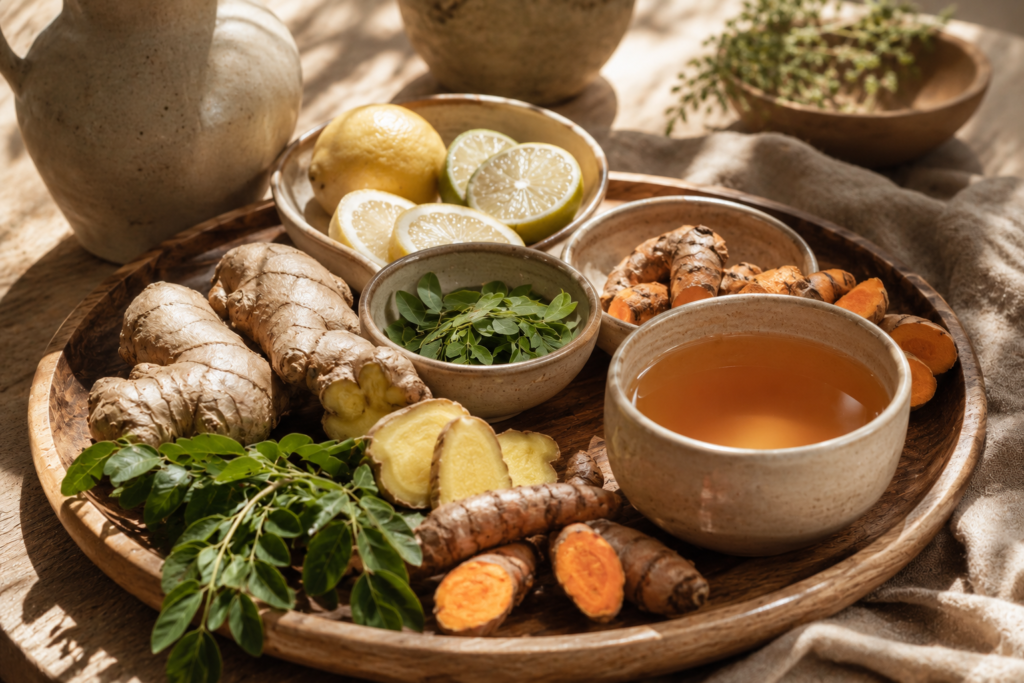
Examples include:
- Ginger for digestive comfort
- Turmeric as part of antioxidant-rich nutrition
- Holy basil for stress-support traditions
- Moringa as a nutrient-rich botanical
- Sea moss as a mineral-rich whole food ingredient
These herbs are most beneficial when combined with healthy eating, regular movement, hydration, and adequate rest.
Remember that no single ingredient replaces a balanced lifestyle.
Common Herbal Self-Care Mistakes to Avoid
Beginning a wellness journey can be exciting, but it’s also easy to develop unrealistic expectations.
Expecting Instant Results
Natural wellness practices generally focus on gradual, long-term support rather than quick fixes.
Doing Too Much at Once
Introducing several new habits simultaneously may become overwhelming. Start with one routine and build gradually.
Forgetting Lifestyle Basics
Herbal wellness works best alongside:
- Nutritious meals
- Quality sleep
- Daily movement
- Stress management
- Proper hydration
These foundational habits remain essential.
Assuming Natural Always Means Risk-Free
Even natural herbs may not be appropriate for everyone. If you are pregnant, nursing, managing a medical condition, or taking medications, consult a qualified healthcare professional before beginning new herbal practices.
Building a Sustainable Herbal Self-Care Routine
Long-lasting wellness often comes from consistency rather than intensity.
Consider creating a daily rhythm such as:
Morning
- Hydrate
- Gentle stretching
- Herbal tea
- Mindful intention for the day
Afternoon
- Nourishing meals
- Short outdoor walk
- Regular hydration
Evening
- Herbal skincare ritual
- Gentle scalp massage
- Screen-free relaxation
- Restful bedtime routine
These simple practices can transform ordinary moments into meaningful wellness rituals.
Final Thoughts
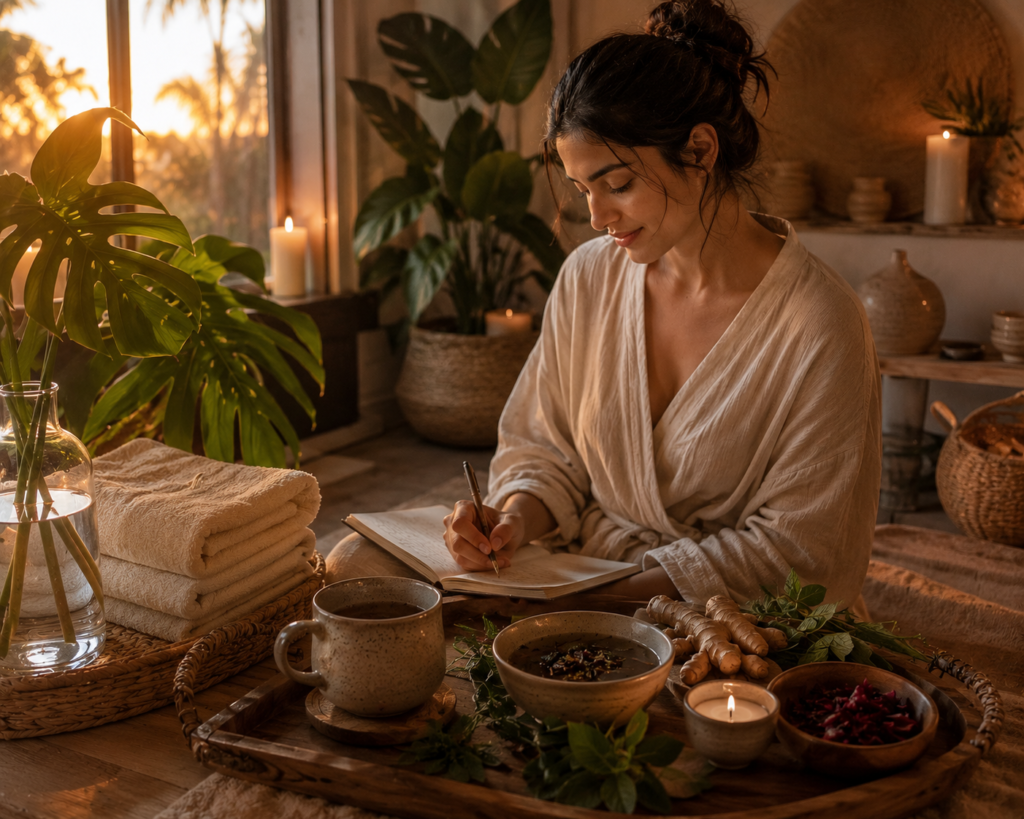
Herbal self-care is less about following complicated routines and more about cultivating intentional habits that fit naturally into everyday life. Whether you’re caring for your skin, supporting healthy hair, or seeking greater vitality, botanical rituals may offer gentle ways to reconnect with yourself and the natural world.
Remember that lasting wellness is built through consistent choices rather than quick solutions. Small daily practices—combined with balanced nutrition, movement, quality rest, and mindfulness—can create a foundation for holistic wellbeing over time.
As with any wellness approach, herbal self-care should complement—not replace—professional medical advice. By listening to your body and embracing nature-inspired rituals with patience and care, you can create a sustainable self-care practice that supports your journey toward everyday wellness.