
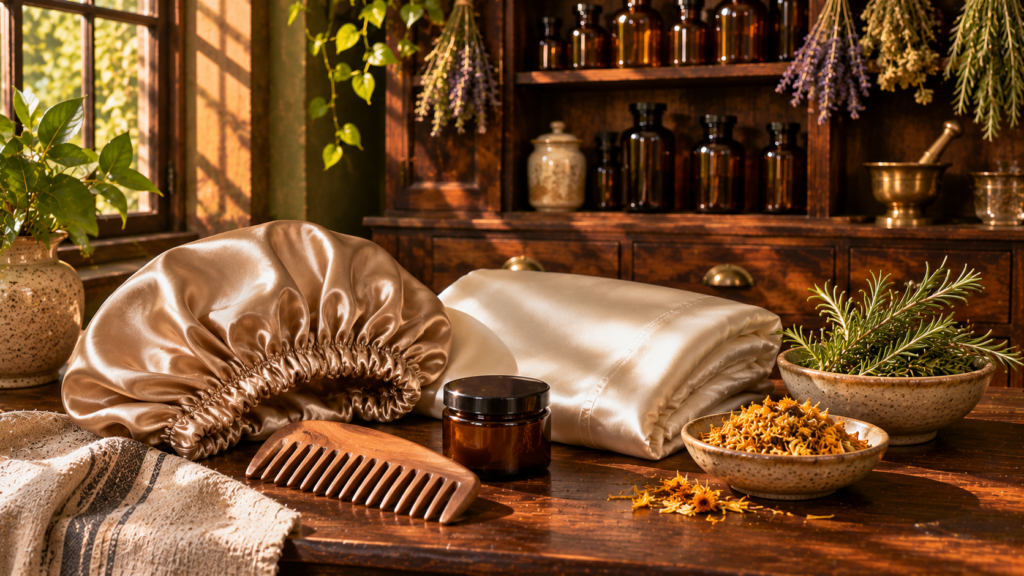
You went to bed with your hair looking perfectly fine.
Your curls felt soft. Your strands were manageable. You might have even finished your usual evening routine.
Then morning arrived.
Suddenly, there are tangles near the back of your head, flattened sections, and a few strands that seem determined to go in every direction.
Sound familiar?
These changes don’t necessarily mean your hair products stopped working overnight.
Sleeping involves movement, contact with fabrics, and hours of pressure against particular sections of hair.
For people exploring all natural hair products, understanding what happens overnight can be just as useful as choosing the right conditioner or styling cream.
Sometimes, better morning hair begins with what happens before bed.
Your Hair Doesn’t Stay Still While You Sleep
Even when you’re resting, your hair may experience movement.
Turning your head against a pillow creates contact between hair fibers and fabric.
Some strands shift position.
Others become compressed beneath your head.
Loose sections may rub against one another.
Over several hours, these small movements can contribute to tangling, frizz, or changes in curl definition.
The effects vary depending on hair length, texture, density, and sleeping habits.
Someone with short, straight hair may notice very little difference.
A person with long, tightly coiled hair may experience more noticeable tangling in certain areas.
Neither experience means the hair is automatically unhealthy.
Why Friction Matters More Than You Think
Friction occurs when two surfaces move against one another.
During sleep, hair repeatedly contacts pillowcases, blankets, and sometimes clothing.
This movement can contribute to surface wear and tangling.
Hair fibers are especially vulnerable when they experience repeated mechanical stress.
That doesn’t mean one night on a cotton pillowcase will damage your hair.
Instead, it’s worth considering the cumulative effects of everyday handling.
Gentle nighttime habits may help reduce unnecessary friction, particularly for hair that tangles easily.
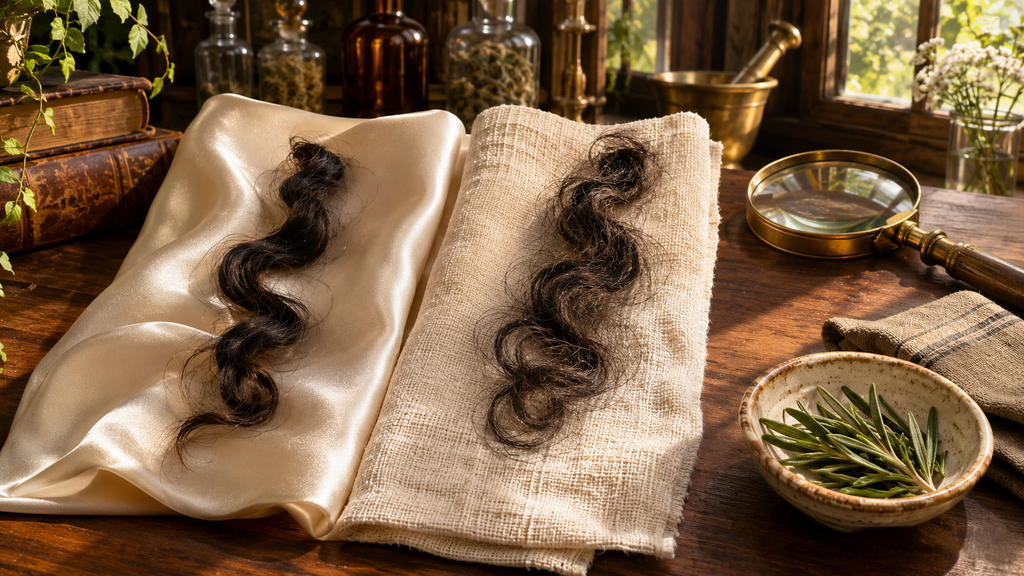
Why the Back of Your Hair Gets Tangled
Many people notice that the hair near the nape becomes tangled more easily than other sections.
This area frequently contacts clothing collars, scarves, and pillowcases.
During sleep, strands around the back of the head may experience repeated movement and pressure.
For longer or textured hair, loose strands can become intertwined.
The result may be a small knot or a section that feels more difficult to separate.
Trying to remove those tangles quickly can create additional pulling.
Instead, work gently and use an appropriate detangling product when needed.
Start near the ends and gradually move toward the roots, supporting the section with your hand.
Satin and Silk: Are They Worth Considering?
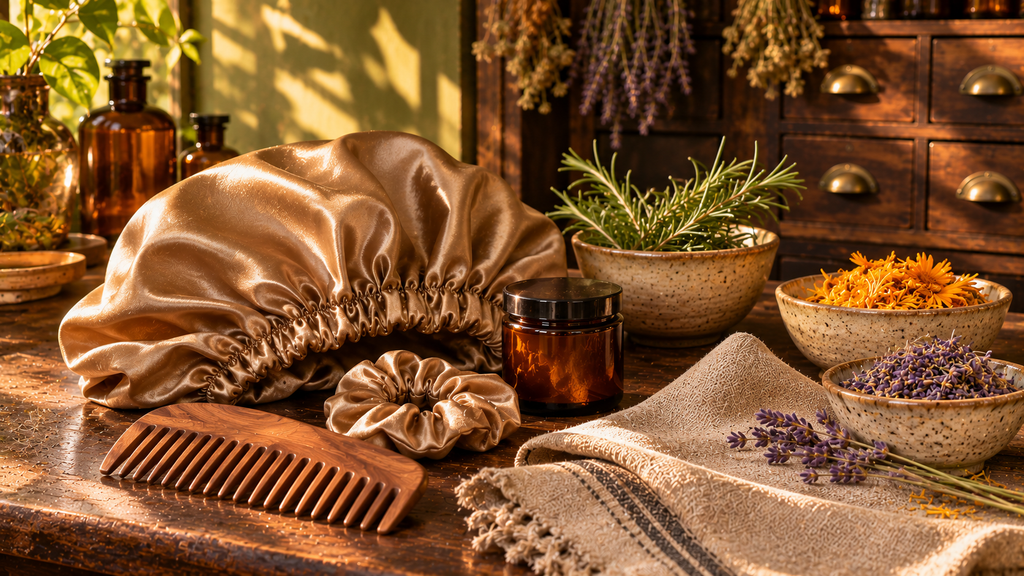
Satin pillowcases and bonnets are popular accessories in textured hair care.
Satin refers to a fabric weave rather than a particular fiber.
It can be made from materials such as polyester or silk.
Silk, meanwhile, is a fiber that can be woven into different fabrics.
Smooth fabrics may reduce certain forms of friction compared with rougher surfaces.
However, the results depend on fabric construction, hair characteristics, and how the accessory is used.
A satin bonnet isn’t a guaranteed solution for breakage or dryness.
But it can be a practical option for people who want to keep their hair more contained overnight.
Comfort and proper fit matter, too.
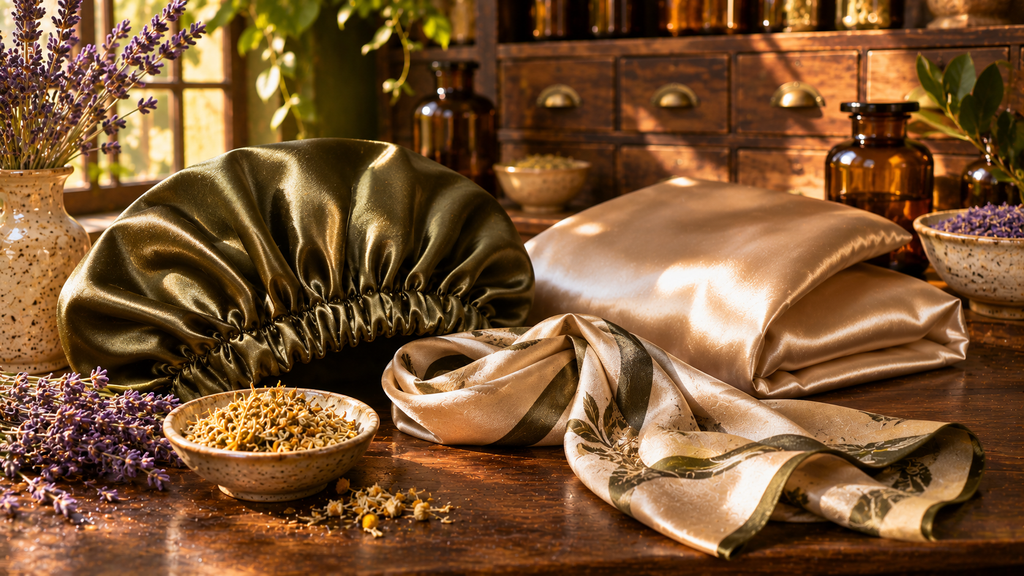
Protective Styling Doesn’t Have to Be Complicated
A nighttime hairstyle doesn’t need to be elaborate.
Some people prefer a loose braid.
Others use a gentle twist, a loose pineapple hairstyle, or a comfortable bonnet.
The goal is to reduce unnecessary movement and tangling without creating excessive tension.
Avoid pulling hair tightly around the hairline.
Repeated tension from tight hairstyles can contribute to traction-related hair loss.
Choose a method that feels comfortable and doesn’t place persistent pressure on the scalp.
If a style causes pain, headaches, or noticeable pulling, loosen or change it.
Protective habits should support comfort, not create another source of stress.
Does Your Hair Actually Lose Moisture Overnight?
Hair may feel drier in the morning, but that sensation doesn’t necessarily mean it has lost a large amount of water.
Surface texture, tangling, product residue, and environmental conditions can all influence how hair feels.
Indoor heating or air conditioning may also affect the surrounding environment.
Some products help improve lubrication and reduce friction, making strands feel smoother.
However, a softer feeling doesn’t always indicate increased water content.
This is why it’s useful to distinguish between hair that feels rough and hair that genuinely needs a different conditioning approach.
Before adding more products, consider whether gentle detangling or restyling is enough.
You Don’t Need to Reapply Everything Each Morning
When hair looks different after sleeping, it’s tempting to repeat an entire styling routine.
More leave-in conditioner.
More oil.
More cream.
But additional product isn’t always necessary.
Depending on your hair and the formulation, a small amount of an appropriate refresher or gentle reshaping may be enough.
Some hairstyles can be restored simply by separating compressed sections.
Others may need more attention.
Follow product directions and avoid layering multiple formulas without considering buildup.
Using fewer products can sometimes make it easier to understand what your hair actually needs.
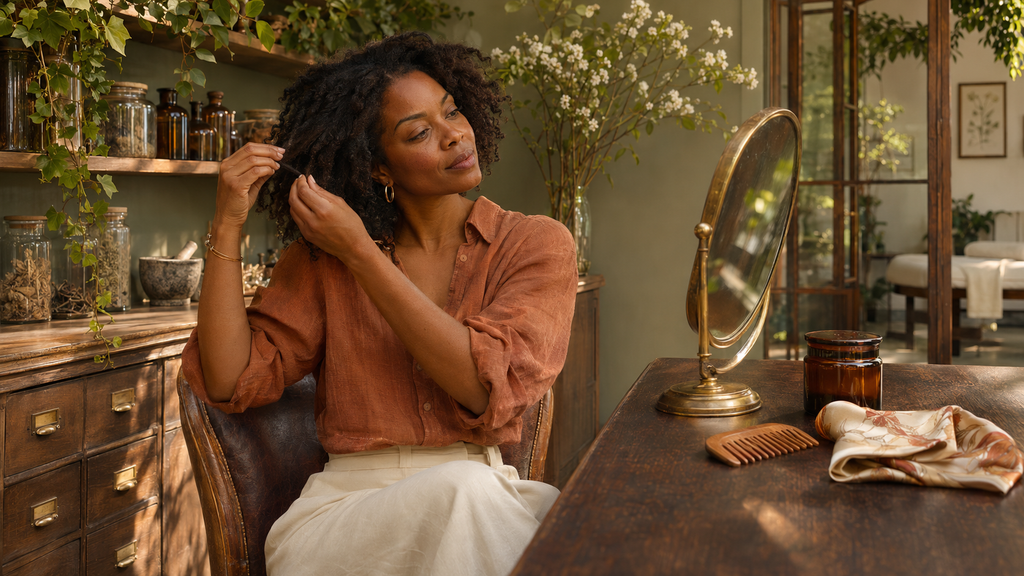
How to Make Morning Detangling Gentler
If your hair becomes tangled overnight, resist the urge to pull through knots quickly.
Begin by separating the hair into manageable sections.
Use your fingers or an appropriate detangling tool.
If your hair benefits from a conditioner or detangling product, apply it according to the instructions.
Work slowly from the ends toward the roots.
Avoid forceful brushing, especially when strands are already tangled.
Hair is more vulnerable to mechanical damage when handled roughly.
A few extra minutes of gentle care may help reduce unnecessary pulling and breakage.
When Your Nighttime Routine Needs Adjusting
Not every protective habit works for everyone.
A bonnet may slip off during sleep.
A braid might leave unwanted bends.
A scarf could feel uncomfortable.
Instead of forcing a particular method, adjust it to your needs.
You may prefer a different fabric, a looser hairstyle, or a smooth pillowcase.
Pay attention to how your hair feels in the morning.
Does it tangle less?
Is the style comfortable?
Does your scalp feel free from tension?
These observations can help you choose practical habits rather than following trends that don’t suit you.
Botanical Hair Care Is About More Than Ingredients
Natural hair care often emphasizes plant-derived ingredients.
But hair maintenance also involves physical handling.
A carefully formulated conditioner may help improve manageability.
However, repeated pulling, excessive heat, and unnecessary friction can still affect the hair.
Likewise, a gentle nighttime routine doesn’t replace cleansing or conditioning when those are needed.
These approaches work together.
When choosing all natural hair products, consider their intended purpose alongside the everyday habits that influence your hair.
The best approach is one that suits your hair, lifestyle, and comfort.
Key Takeaways
- Hair experiences movement and friction during sleep.
- Pillowcases, clothing, and bedding can contribute to tangling.
- The nape of the neck is a common area for overnight knots.
- Smooth fabrics may help reduce certain types of friction.
- Satin and silk are not interchangeable terms.
- Nighttime hairstyles should be comfortable and free from excessive tension.
- Morning roughness doesn’t always mean hair needs more product.
- Gentle detangling can help reduce unnecessary mechanical stress.
- Protective accessories should suit individual hair needs and sleeping habits.
- Hair-care products and everyday handling habits both contribute to manageability.
Final Thoughts
Waking up with tangled or flattened hair doesn’t mean you did something wrong the night before.
Hair naturally shifts during sleep, and different textures respond to that movement in different ways.
A comfortable nighttime hairstyle, gentle handling, and thoughtful use of products may help make mornings easier.
You don’t need an elaborate collection of accessories or a completely new routine.
Sometimes, small adjustments are enough to make everyday hair care feel more manageable.
Explore botanical hair care and natural personal-care essentials with a practical approach that values comfort, gentle maintenance, and products suited to your individual needs.