Walk through historic Charleston, and you’ll encounter reminders of a city shaped by the water.
Its harbor, old buildings, and streets reflect centuries of movement, commerce, and cultural exchange.
Plants were part of that story.
Spices, seeds, agricultural crops, and other botanical materials traveled through trade networks connecting the Atlantic world.
Some were grown locally. Others arrived from distant regions.
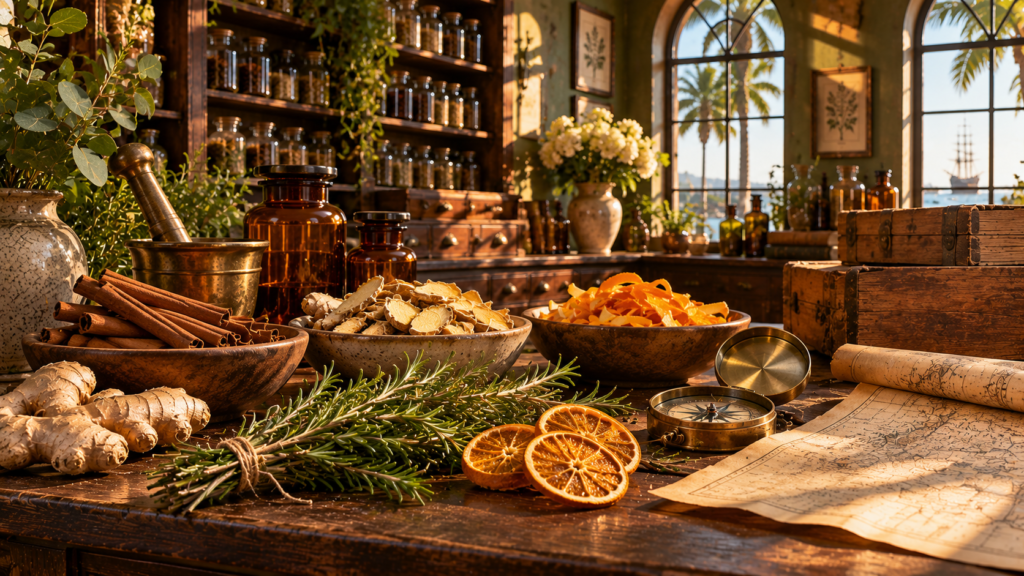
For anyone exploring an apothecary in Charleston, South Carolina, this history offers an interesting perspective on the plants that became familiar in Southern kitchens, gardens, and personal-care traditions.
But botanical history is more complicated than a story about imported ingredients.
It also involves Indigenous knowledge, African agricultural expertise, forced labor, migration, and the communities that preserved plant traditions across generations.
Charleston’s Harbor Connected Different Botanical Worlds
Charleston developed into a major colonial Atlantic port.
Ships carried agricultural commodities and manufactured goods while connecting the region with broader trade networks.
Plant materials were among the goods moving through those systems.
Spices, seeds, and other botanical commodities circulated through merchants and households, although the origins and routes of individual ingredients varied.
These connections influenced what was available in local markets.
However, the port’s commercial history cannot be separated from slavery and the exploitation of enslaved Africans.
The wealth generated through colonial agriculture and trade came at enormous human cost.
Understanding Charleston’s botanical past requires acknowledging both the movement of plants and the people whose labor and knowledge shaped the region.
Not Every Familiar Plant Came From the Lowcountry
Many ingredients now associated with Southern cooking and personal care have origins outside the southeastern United States.
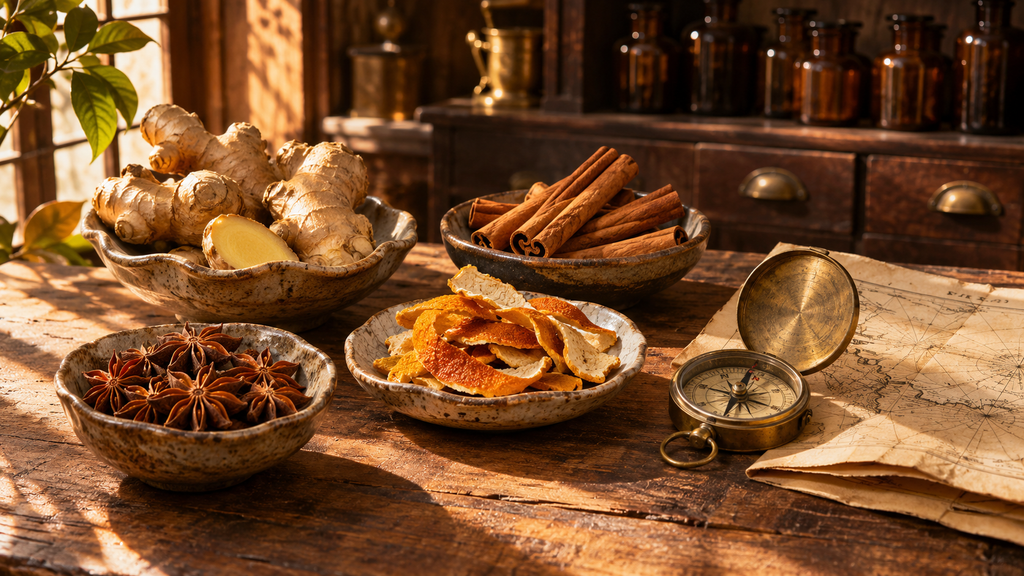
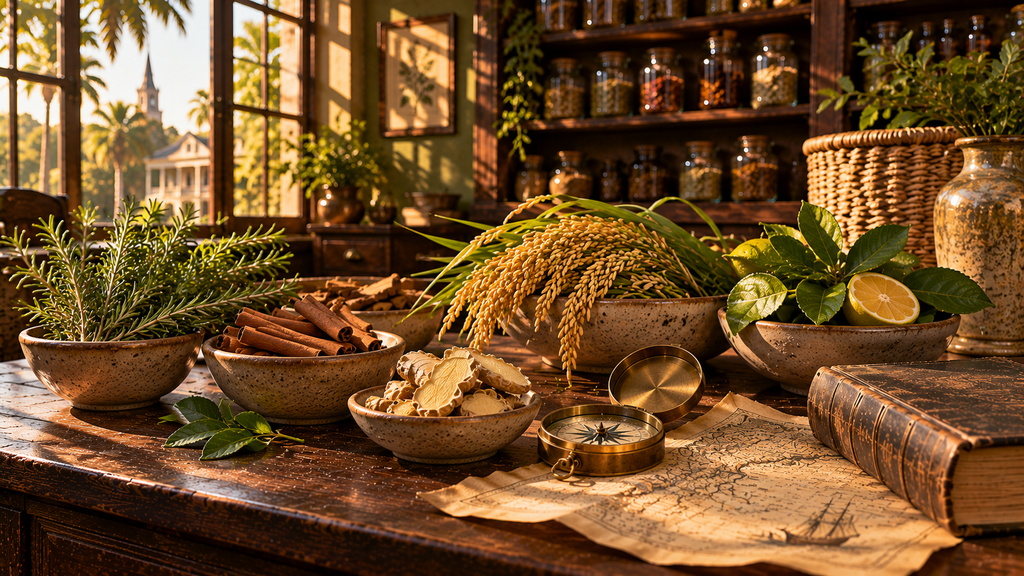
Ginger originated in tropical Asia.
Cinnamon comes from trees native to parts of Asia.
Citrus fruits have complex histories of cultivation and movement across continents.
Over time, imported plants and plant products became familiar in many American households.
Yet familiarity doesn’t make a plant native to a particular region.
Learning where botanicals originated can reveal how gardening, cooking, and trade developed through centuries of human movement.
A modern apothecary can encourage that curiosity without presenting every familiar herb as an original Lowcountry plant.
Indigenous Plant Knowledge Predates Charleston’s Port
Long before Charleston became a colonial trading center, Indigenous communities maintained deep relationships with the plants and landscapes of the Lowcountry.
Local botanical knowledge developed through observation, agriculture, food practices, and cultural traditions.
Different Indigenous nations had distinct practices, and those traditions should not be treated as one interchangeable body of knowledge.
The arrival of European colonists disrupted Indigenous communities through land dispossession, violence, and disease.
A responsible account of Charleston’s plant history begins before colonial commerce.
It recognizes that botanical understanding existed in the region long before imported goods appeared in merchant inventories.
African Knowledge Helped Shape Lowcountry Agriculture
African agricultural expertise played an important role in the development of Lowcountry foodways and farming.
Enslaved Africans brought knowledge of crops, cultivation, and food preparation from diverse African societies.
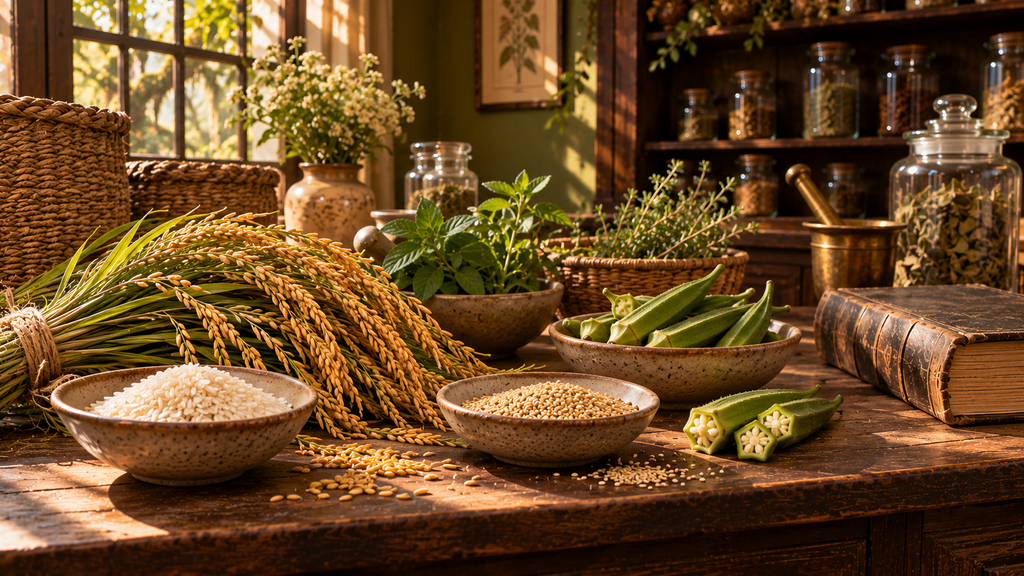
Rice cultivation is one of the best-known examples of African expertise influencing the region’s agricultural history.
This knowledge was used within a system of forced labor that enriched plantation owners while denying freedom and compensation to enslaved workers.
African-descended communities also preserved culinary and cultural traditions that remain significant in the Lowcountry.
When discussing botanical heritage, it is important to recognize the people who carried and maintained knowledge, not only the plants themselves.
How Plants Became Part of Everyday Households
Not every botanical ingredient was used in an elaborate preparation.
Many plants became familiar through ordinary activities.
Families cultivated herbs for cooking.
Gardens supplied seasonal ingredients.
Spices flavored meals and preserved cultural connections.
Flowers and aromatic plants contributed to domestic environments.
These everyday uses helped keep botanical knowledge present across generations.
However, historical household practices should not automatically be interpreted as evidence of medical effectiveness.
Some traditional uses were practical, cultural, or culinary rather than therapeutic.
Understanding those distinctions helps us appreciate plant traditions without exaggerating their benefits.
The Apothecary Was More Than a Collection of Jars
Historically, apothecaries prepared and dispensed substances used in medicine.
Their work varied across places and periods, and historical preparations did not necessarily meet modern standards of safety or effectiveness.
Today, the word apothecary often appears in botanical personal care, herbal retail, and wellness education.
The modern use of the term may evoke traditional knowledge, careful preparation, and familiarity with plant ingredients.
But the historical profession and a contemporary botanical wellness business are not identical.
A modern apothecary should be evaluated according to its actual products, claims, transparency, and applicable regulations.
The name alone doesn’t establish medical expertise.
Charleston’s Botanical Story Is Still Evolving
Charleston’s relationship with plants didn’t end with colonial trade.
Gardens, markets, food traditions, and community knowledge continue to shape how people encounter botanicals.
Contemporary interest in natural skincare and botanical personal care adds another dimension.
People may explore ingredients because of their cultural significance, sensory qualities, or suitability for a particular formulation.
The important distinction is between appreciating botanical heritage and assuming that traditional use guarantees modern benefits.
An ingredient’s history can be meaningful without serving as proof of its effectiveness.
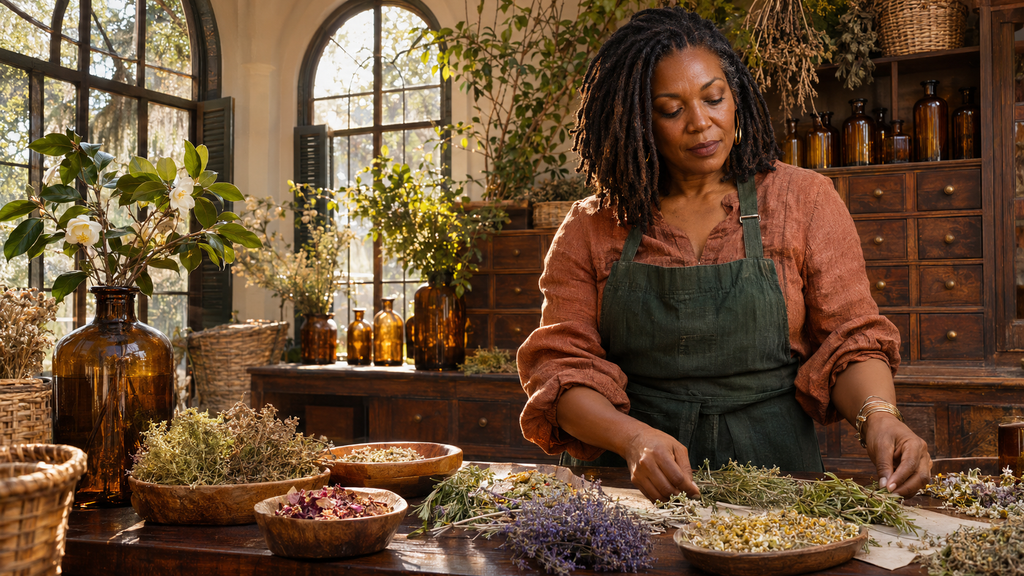
What Historical Botanical Trade Can Teach Modern Shoppers
The history of botanical trade encourages us to think about ingredients as more than names on a container.
Every plant has a geographic origin.
Every commercial ingredient has a supply chain.
And many botanical traditions are connected with communities whose knowledge deserves recognition.
When exploring botanical products, consider whether a business communicates clearly about ingredients and their intended uses.
Look for responsible claims rather than promises based solely on tradition.
You can appreciate the cultural history of a plant while still expecting appropriate modern safety and quality standards.
Heritage Doesn’t Automatically Mean a Product Is Better
A product described as traditional or heritage-inspired may sound appealing.
But historical associations do not establish quality.
A preparation made according to an old method is not automatically safer than a modern formulation.
Likewise, an ingredient imported from a distant region isn’t necessarily more valuable than a locally sourced one.
The appropriate choice depends on the product’s intended purpose, formulation, manufacturing practices, and individual suitability.
History adds context.
It shouldn’t replace evidence.
A More Thoughtful Way to Explore Botanical Heritage
You don’t need to become a historian to appreciate Charleston’s botanical story.
Start with a familiar ingredient.
Learn where the plant originated.
Explore how it became part of regional food or gardening traditions.
Consider whose agricultural knowledge contributed to its cultivation.
When possible, consult reputable museums, botanical institutions, and historical resources.
These steps can make everyday ingredients more interesting without turning cultural traditions into unsupported wellness claims.
Key Takeaways
- Charleston’s historic port connected the Lowcountry with wider Atlantic trade networks.
- Botanical commodities moved through those networks alongside other goods.
- Many familiar spices and herbs originated outside South Carolina.
- Indigenous communities maintained botanical knowledge before European colonization.
- African agricultural expertise significantly shaped Lowcountry farming and food traditions.
- Charleston’s trade history is inseparable from slavery and colonial exploitation.
- Everyday cooking and gardening helped preserve botanical knowledge.
- Historical apothecaries differ from modern botanical wellness businesses.
- Traditional use doesn’t automatically establish product safety or effectiveness.
- Botanical heritage can encourage more informed and culturally respectful choices.
Final Thoughts
Charleston’s botanical history is a story of plants, places, and people.
From Indigenous knowledge and African agricultural expertise to international trade and everyday household traditions, many influences shaped the ingredients familiar to the Lowcountry today.
Understanding those connections makes botanical wellness more meaningful.
It encourages curiosity about where ingredients come from, whose knowledge contributed to their use, and how modern products should be evaluated.
Explore botanical wellness and apothecary traditions in Charleston with an appreciation for the cultural histories and everyday practices that continue to shape plant-based personal care.