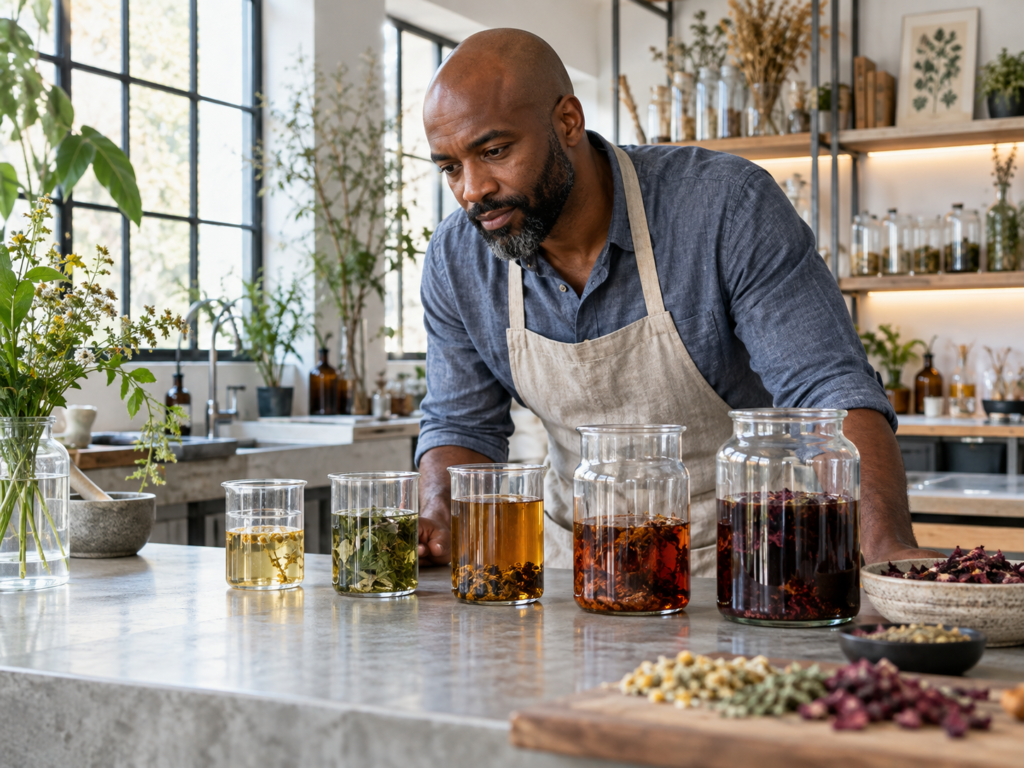
A handful of dried herbs sits beside a glass jar.
Nearby, another container holds a finished botanical preparation.
They may have started with the same plant, but they are not necessarily the same thing.
What happens between the ingredient and the finished preparation matters.
Some botanicals are steeped in water. Others are infused into oils. Certain ingredients are blended into creams, while others require more specialized processing.
These differences help explain why botanical products can vary so much.
In a modern apotheca, understanding preparation methods can offer a clearer perspective on natural wellness and plant-based personal care.
You don’t need to make products yourself to appreciate the process.
Knowing a little about what happens before the bottle can help you understand what you’re buying.
A Botanical Ingredient Is Only the Beginning
When people explore plant-based products, they often focus on the ingredient list.
Rosemary.
Hibiscus.
Ginger.
Aloe vera.
But a plant’s name doesn’t tell you how it was prepared.
For example, dried rosemary steeped in hot water is different from rosemary infused into a carrier oil.
Both involve the same plant, yet the preparation methods and resulting mixtures differ.
Water and oil interact differently with plant constituents.
This means the finished preparations may contain different combinations and amounts of extracted compounds.
That is why an ingredient list is only one part of understanding a botanical product.
Steeping Is More Than Adding Hot Water
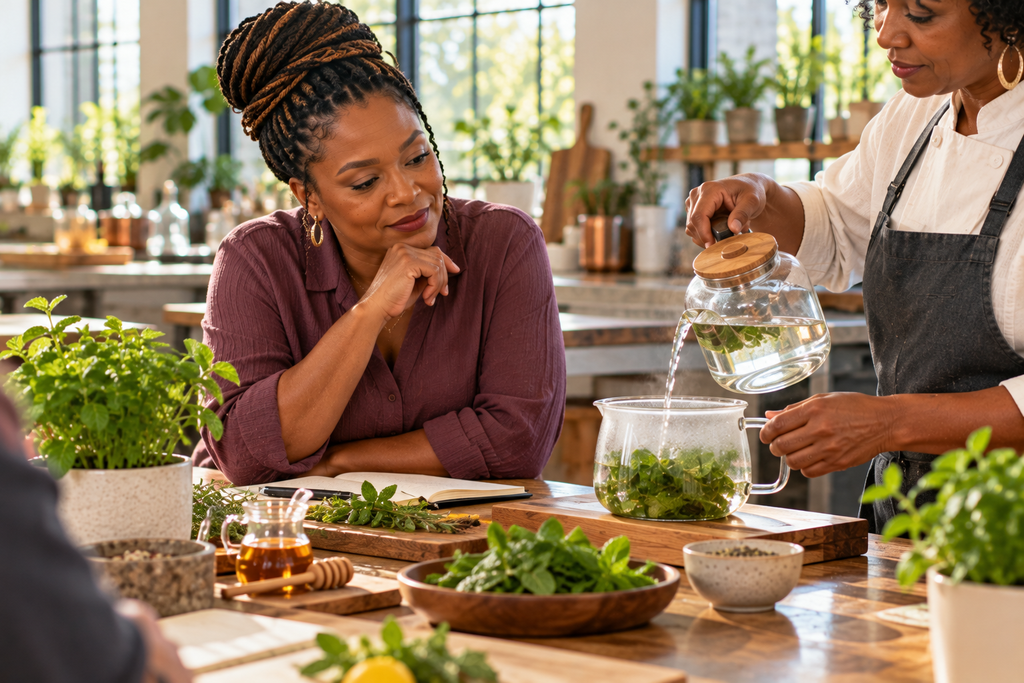
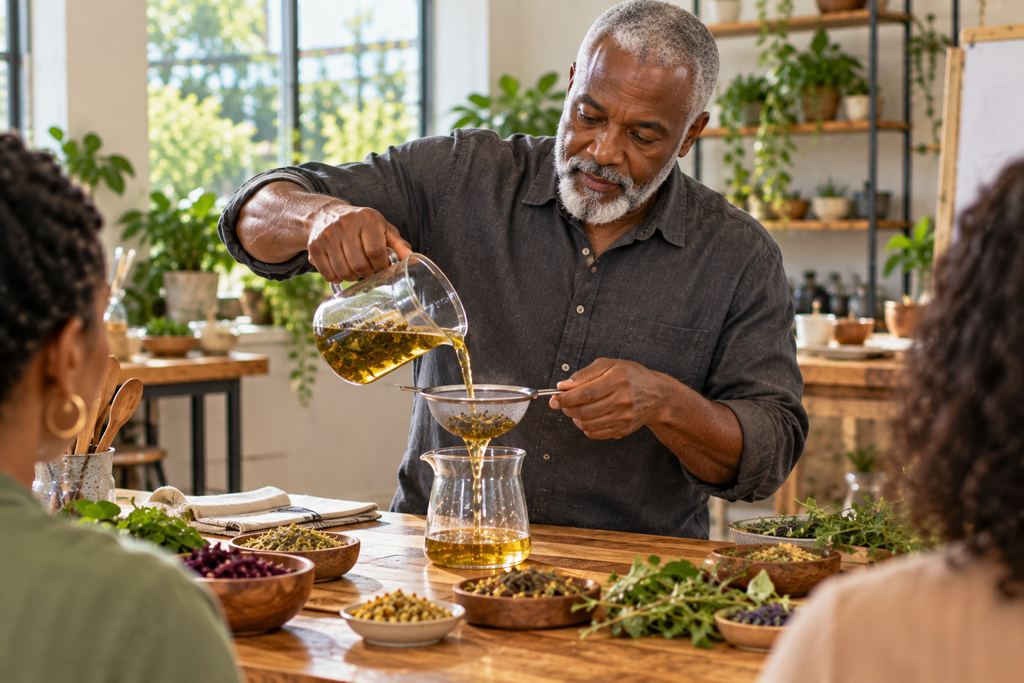
Steeping is one of the most familiar preparation methods.
Think about making tea.
Plant material comes into contact with water for a period of time, allowing certain soluble compounds to move into the liquid.
The temperature, amount of plant material, and steeping duration can influence the result.
A brief steep may produce a different preparation from a longer one.
However, longer steeping doesn’t automatically make something safer, stronger in a beneficial way, or more effective.
The appropriate method depends on the plant and intended use.
Some botanicals are unsuitable for home preparation or consumption, so identification and safety information remain essential.
Oil Infusions Follow a Different Process
Oil infusions involve allowing suitable plant material to come into contact with a carrier oil under controlled conditions.
Unlike water-based preparations, oil-based infusions favor constituents that are compatible with the oil medium.
The result depends on several factors, including the plant material, carrier oil, preparation conditions, and processing method.
Oil infusions may be incorporated into certain topical products.
However, not every plant is appropriate for oil infusion, and homemade preparations can present contamination or stability concerns.
Fresh plant material, for example, may introduce moisture that requires careful handling.
Commercial botanical preparations should follow appropriate formulation, manufacturing, and quality-control practices.
The important lesson is simple: changing the preparation medium changes the process.
Blending Ingredients Isn’t the Same as Extracting Them
Imagine adding a plant powder directly into a mixture.
Now imagine first extracting selected constituents from that plant and incorporating the resulting extract into a formulation.
Those are different approaches.
Direct blending may leave particles of the original ingredient in the finished mixture.
Extraction separates some constituents from the plant material using a particular medium or process.
Neither method is automatically superior.
The appropriate choice depends on the ingredient, product type, formulation goals, and safety requirements.
This distinction can help explain why two products featuring the same botanical ingredient may look, feel, or behave differently.
The Order of Mixing Can Influence the Result
In more complex formulations, the order in which ingredients are combined may affect the finished product.
For example, creams often contain both water-based and oil-based components.
Creating a stable emulsion involves appropriate ingredients and controlled processing.
Temperature, mixing conditions, and the addition of certain ingredients can influence the final consistency and stability.
Some components may be sensitive to excessive heat or unsuitable processing conditions.
That is why professional formulation involves more than combining ingredients in a container.
The preparation process helps determine whether the finished product has the intended characteristics.
Filtration Can Change What Remains
After an infusion or extraction, some preparations undergo filtration.
This process separates certain solid particles from the liquid.
Depending on the method, filtration may produce a clearer preparation or remove unwanted suspended material.
However, a clear liquid is not necessarily safer or more effective than a cloudy one.
Appearance alone cannot confirm purity, microbial safety, or product quality.
Appropriate testing and manufacturing controls remain important.
When exploring botanical products, remember that visual clarity is only one characteristic of the finished preparation.
Preparation Methods Don’t Guarantee Benefits
A product may describe itself as infused, concentrated, cold-processed, or traditionally prepared.
These terms can provide information about manufacturing.
But they don’t automatically prove that the finished product delivers a particular health or skincare benefit.
Effectiveness depends on the formulation, intended use, available evidence, and other factors.
Likewise, a product made with natural ingredients isn’t automatically safer than one containing synthetic ingredients.
Both can cause unwanted reactions when unsuitable for an individual or used incorrectly.
This is especially important when evaluating botanical wellness products that make broad claims.
Understanding preparation methods helps you ask better questions without assuming that one process is always best.
Storage Is Part of the Preparation Story
The process doesn’t end when a product is placed into a container.
Packaging and storage can influence product stability.
Some preparations are sensitive to light, heat, oxygen, or moisture.
Water-containing formulations may also require appropriate preservation systems to control microbial contamination.
Oil-based products have different stability considerations, including oxidation.
This is why storage directions should be treated as part of the product’s intended use.
Follow the manufacturer’s instructions rather than assuming every botanical preparation can be stored in the same way.
Learn From the Process Without Making Everything Yourself
Understanding botanical preparation doesn’t mean you need to turn your kitchen into a formulation laboratory.
You can appreciate the differences between steeping, infusing, blending, and filtering without attempting to manufacture concentrated personal-care products at home.
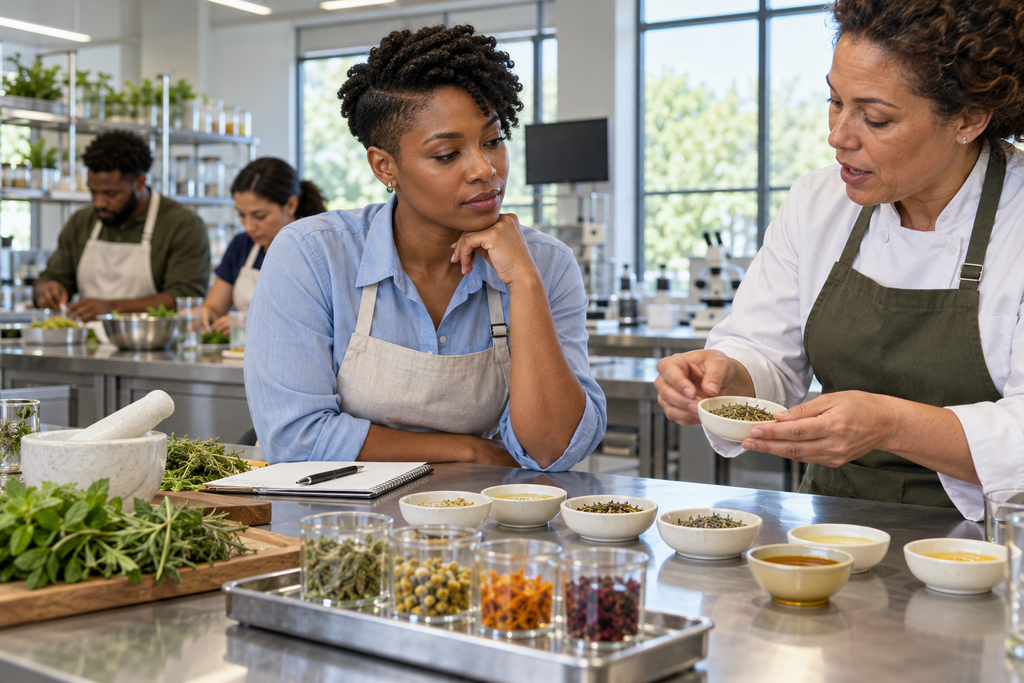
For beginners, learning through reputable educational demonstrations can be a safer introduction.
You might observe how culinary herbs behave in water or compare the appearance of filtered and unfiltered food-safe preparations.
Avoid experimenting with unidentified plants, concentrated extracts, or homemade medicinal products without appropriate expertise.
Curiosity and caution can exist together.
Four Things to Notice About Botanical Preparation
When exploring an unfamiliar botanical product, consider four practical details.
The plant: What botanical ingredient does the product contain?
The preparation: Was the ingredient infused, extracted, powdered, or incorporated through another method?
The purpose: What is the finished product intended to do?
The directions: How should it be used and stored?
These details offer a more complete understanding than simply recognizing a familiar plant name.
You don’t need to understand every technical step.
The goal is to become a more informed reader of botanical product information.
Key Takeaways
- A botanical ingredient’s preparation method influences the finished product.
- Water-based and oil-based preparations can extract different plant constituents.
- Steeping time and temperature can affect a water-based infusion.
- Directly blending plant material differs from incorporating an extract.
- Ingredient order and processing conditions can influence complex formulations.
- Filtration changes certain physical characteristics but doesn’t establish safety.
- Preparation terms alone do not prove product effectiveness.
- Packaging, preservation, and storage are important parts of product quality.
- Botanical preparation should be approached with appropriate safety knowledge.
Final Thoughts
A botanical product begins long before someone opens the finished container.
Between the plant and the final preparation are decisions about extraction, blending, processing, and storage.
Understanding those steps can make botanical personal care feel less mysterious.
You don’t have to become a formulator to appreciate why preparation matters.
A little knowledge can help you look beyond ingredient names and consider how the finished product was actually created.
Explore plant-based wellness and botanical personal care with greater curiosity about the preparation methods behind everyday products.