
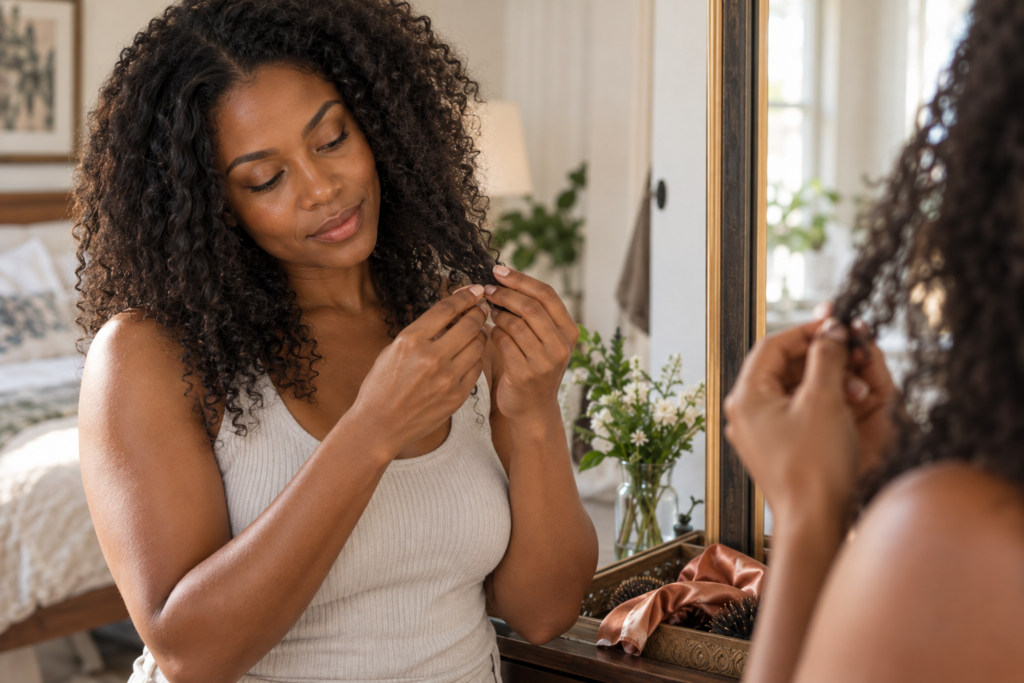
Wash day gets a lot of attention.
There are shampoos, conditioners, masks, detangling sessions, styling steps, and entire routines built around those few hours.
Then wash day ends.
Your hair still has several days of real life ahead of it.
You sleep on it. Style it. Touch it. Sweat. Go outside. Pull it back. Cover it. Uncover it. Refresh it—or sometimes leave it completely alone.
Those quieter days matter.
When exploring all natural hair products, it helps to think beyond what happens in the shower. Paying attention to your hair between washes can make it easier to understand when it actually needs something and when it may simply need less interference.
The Morning Check Can Tell You Plenty
Before reaching for anything, look at your hair.
How does it feel this morning?
Check your scalp, roots, lengths, and ends instead of judging everything by whether yesterday’s style survived the night.
Perhaps your scalp feels perfectly comfortable while your ends need attention.
Maybe your hair still feels manageable and does not need refreshing at all.
Or perhaps you notice tangling in one particular area.
That quick check creates a useful pause between noticing something and automatically applying a product.
Hair care does not always need to begin with a bottle.
Sometimes it begins with paying attention.

Not Every Dry-Looking Curl Needs More Product
A curl that looks different on Wednesday than it did on Sunday is not necessarily a problem.
Hair moves.
Styles soften. Definition changes. Individual sections react differently to sleep, weather, activity, and handling.
It can be tempting to keep layering products whenever hair no longer looks freshly styled.
But adding more is not automatically the answer.
Before refreshing, ask what you are trying to change.
Is the hair actually uncomfortable or difficult to manage?
Are the ends feeling different?
Or are you simply trying to recreate first-day styling several days later?
That distinction matters.
Your hair does not have to look freshly washed every day to be cared for.
Pay Attention to Your Scalp
Between wash days, people often focus on what they can see: curls, volume, frizz, or the overall hairstyle.
Your scalp can get overlooked.
Check in with it too.
Think about how it feels after exercise, wearing hats or scarves, spending time outdoors, or keeping a style in place for several days.
Avoid assuming that every scalp sensation has the same cause.
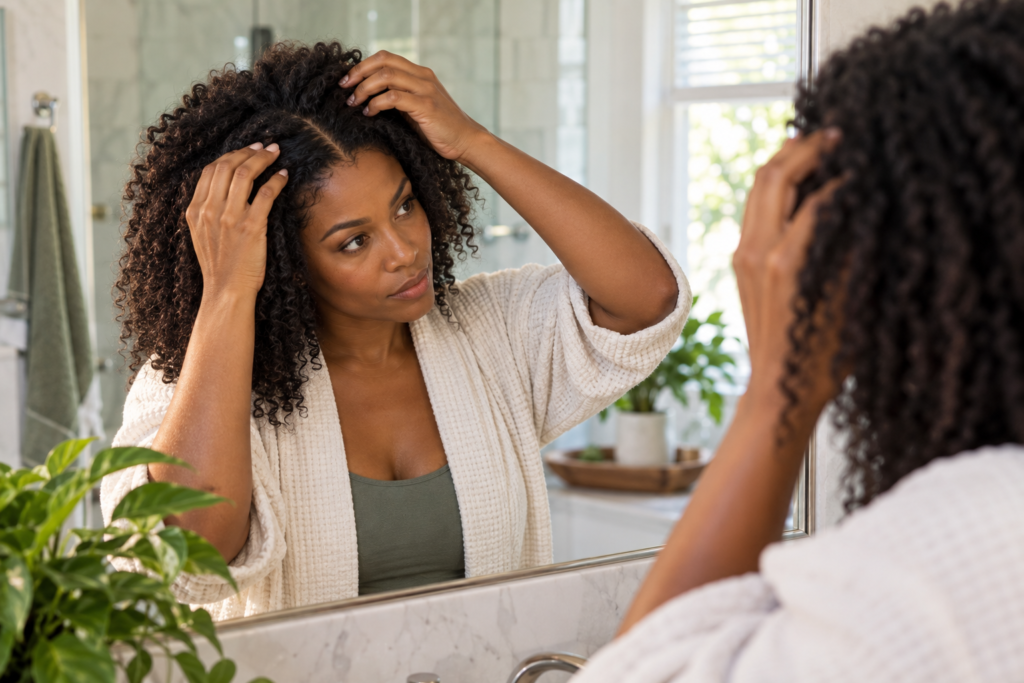
And resist the urge to continually add oils or other preparations simply because scalp care is trending.
If you use a scalp-focused product, follow its directions and consider how it fits with everything already on your hair.
Persistent itching, pain, sores, significant flaking, or other concerning scalp changes are better discussed with a qualified healthcare professional rather than treated through trial-and-error product layering.
Your Hands May Be Doing More Than Your Products
How many times have you touched your hair today?
Probably more than you remember.
You might adjust the front while looking at your phone. Retie a ponytail after lunch. Twist a section while concentrating. Smooth an edge before leaving the house.
Most of these actions are automatic.
Over several days, however, frequent manipulation can become part of your hair-care picture.
Try noticing when you touch or restyle your hair.
You do not need to stop touching it altogether.
Instead, ask whether every adjustment is necessary.
Sometimes the easiest between-wash habit is simply giving your hair a break.
Nighttime Is Part of the Story
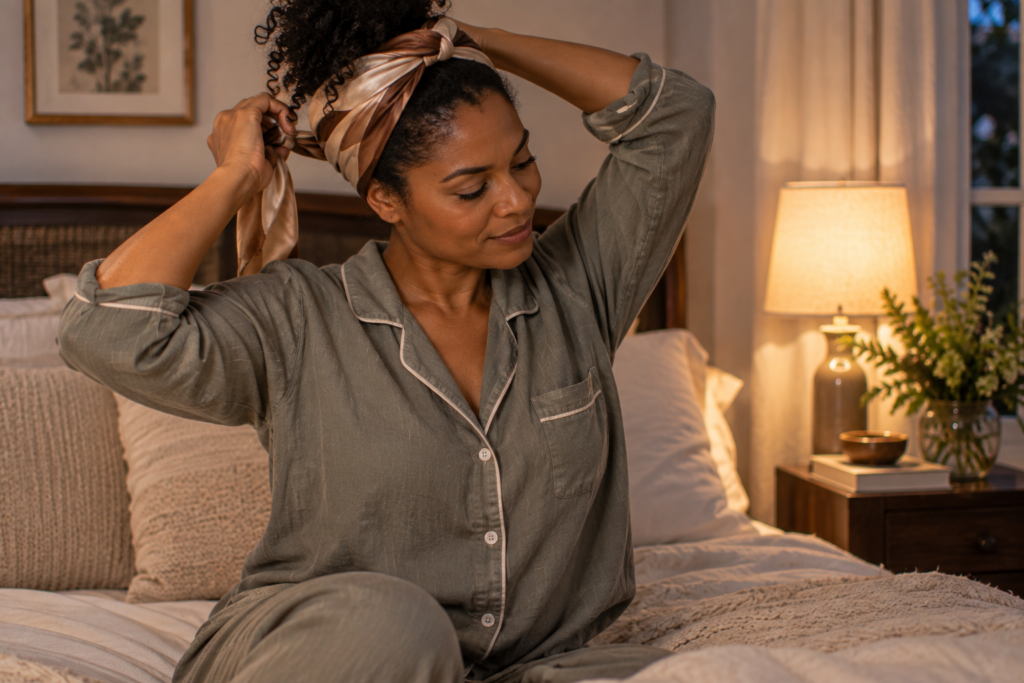
A large portion of the time between wash days is spent asleep.
That makes bedtime worth considering.
How you protect or arrange your hair overnight will depend on your texture, hairstyle, comfort, and preferences. Some people use satin or silk scarves, bonnets, or pillowcases. Others loosely secure their hair to make mornings easier.
There is no single nighttime method that everyone needs to follow.
What matters is what happens when you wake up.
If your current approach consistently leaves you with unnecessary tangling or a difficult morning reset, it may be worth changing the habit before buying another product.
Refresh With a Reason
The word refresh can become surprisingly vague in hair care.
Does your hair need moisture?
Does one section need reshaping?
Are you addressing your scalp?
Are you trying to make an older hairstyle look exactly like day one?
Before adding water, oils, sprays, creams, or other products, decide what the refresh is supposed to accomplish.
Then keep the response proportional.
If only one area needs attention, you may not need to redo your entire head.
This is particularly useful when choosing all natural hair products. Rather than collecting products for every imaginable scenario, look for preparations with a clear role in your actual routine.
Natural does not mean unlimited.
More layers do not necessarily mean more care.
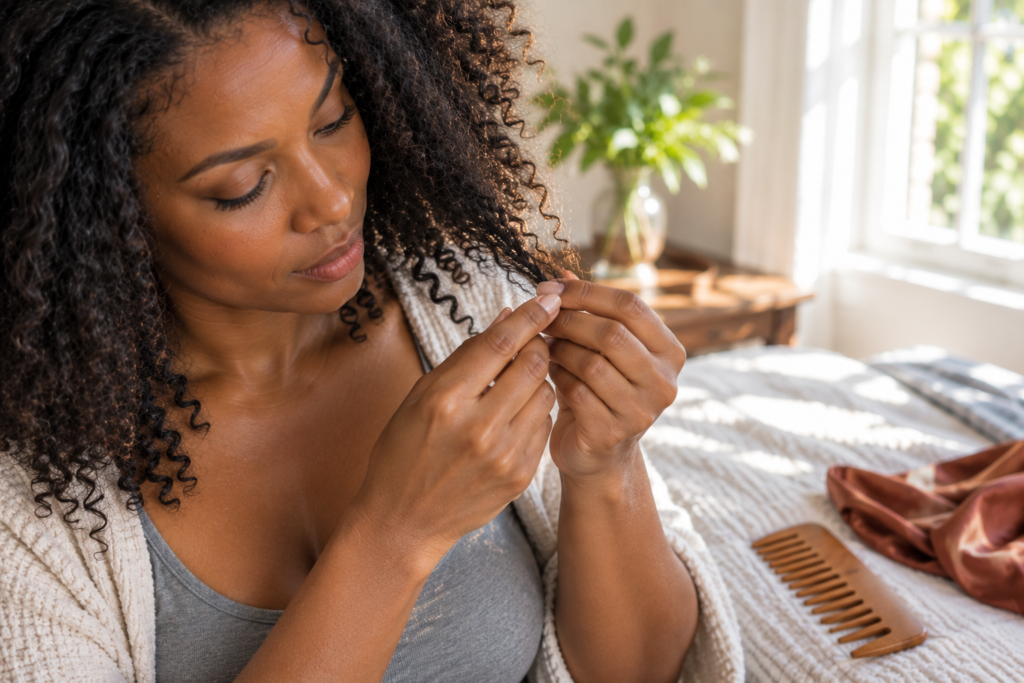
Give Your Ends Some Attention
The ends of your hair have been around longer than the hair closer to your scalp.
They also experience everyday friction from clothing, pillows, styling, detangling, and handling.
Between washes, take a moment to notice them.
Do they feel manageable?
Are they becoming tangled?
Are you constantly pulling or brushing through them?
A quick check can help you decide whether they need attention without automatically applying products throughout your entire head.
This is another reason to stop thinking of hair as one uniform surface.
Different areas may tell you different things.
Know When to Leave Your Hair Alone
Hair care can become a constant project.
Wash.
Style.
Refresh.
Restyle.
Add something.
Fix something.
Repeat.
But there should also be days when nothing needs to happen.
If your scalp feels comfortable, your hair feels manageable, and your style still works for you, leaving it alone can be a perfectly reasonable choice.
This is especially helpful when your bathroom shelf starts becoming crowded.
Every product does not need to be used simply because you own it.
Where Botanical Hair Care Can Fit
All Hilom Apotheca currently offers Rice Spice Hair Tea, an herbal hair and scalp preparation within its hair-care collection.
A product like this should still have a defined place rather than becoming one more step added automatically.
Follow the product directions, pay attention to how it fits alongside the rest of your routine, and avoid assuming that botanical ingredients need to be applied more frequently simply because they are plant-based.
Choosing all natural hair products thoughtfully is less about creating the biggest collection and more about understanding why each preparation is there.
Try a Between-Wash Check-In
For one week, try asking yourself three questions before using a hair product:
- What am I noticing?
Scalp discomfort? Tangling? Dry-feeling ends? A style that simply looks different?
- What am I trying to accomplish?
Comfort? Manageability? Refreshing one section? Preparing for sleep?
- Do I actually need a product for that?
Sometimes the answer will be yes.
Sometimes changing the hairstyle, reducing manipulation, protecting the hair overnight, or simply leaving it alone may be enough.
The point is not to use fewer products at all costs.
It is to use them with purpose.
Key Takeaways
- Hair care continues long after wash day ends.
- Check what your hair and scalp actually need before automatically refreshing.
- A changing hairstyle does not necessarily mean something is wrong.
- Nighttime habits can influence how manageable hair feels the following morning.
- Frequent touching and restyling are worth noticing.
- Different parts of your hair may need different levels of attention.
- Natural hair products should have a clear purpose in your routine.
- Some between-wash days may require very little intervention.
Final Thoughts
There are usually more days between wash days than there are wash days themselves.
Those days deserve attention too.
Not because you need another complicated routine, but because they give you an opportunity to understand your hair outside the shower.
Notice your scalp. Check your ends. Pay attention to how often you restyle. See what happens overnight.
And before reaching for another one of your all natural hair products, ask what you are actually trying to accomplish.
Sometimes your hair needs attention. Sometimes it needs a specific product. And sometimes, it simply needs you to let it have a normal Tuesday.
Explore a more intentional approach to botanical hair care that fits naturally into everyday life.