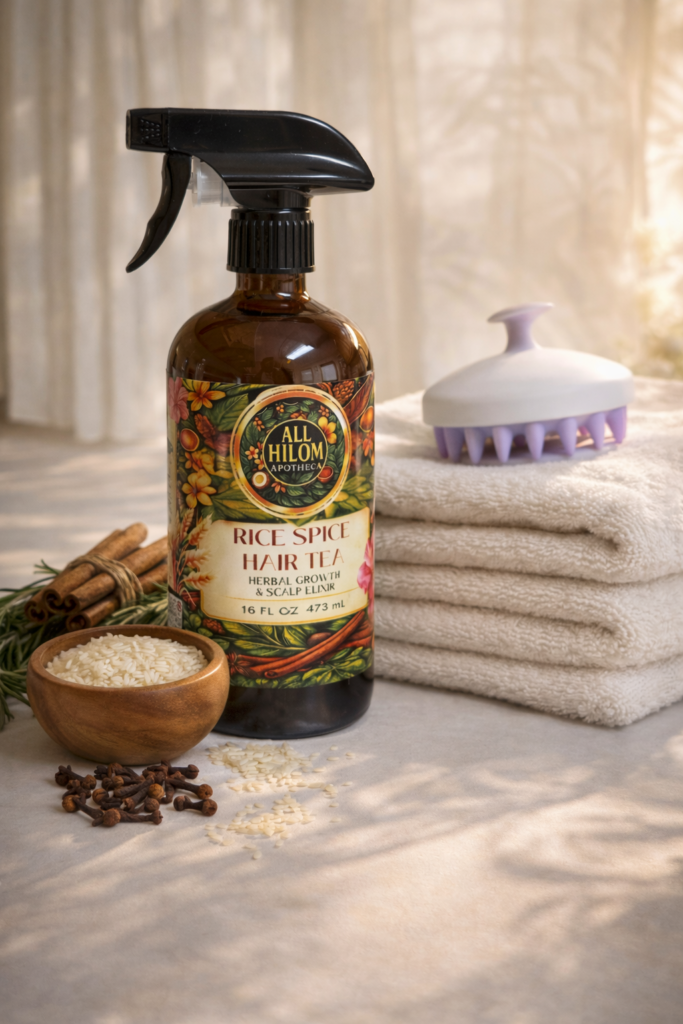
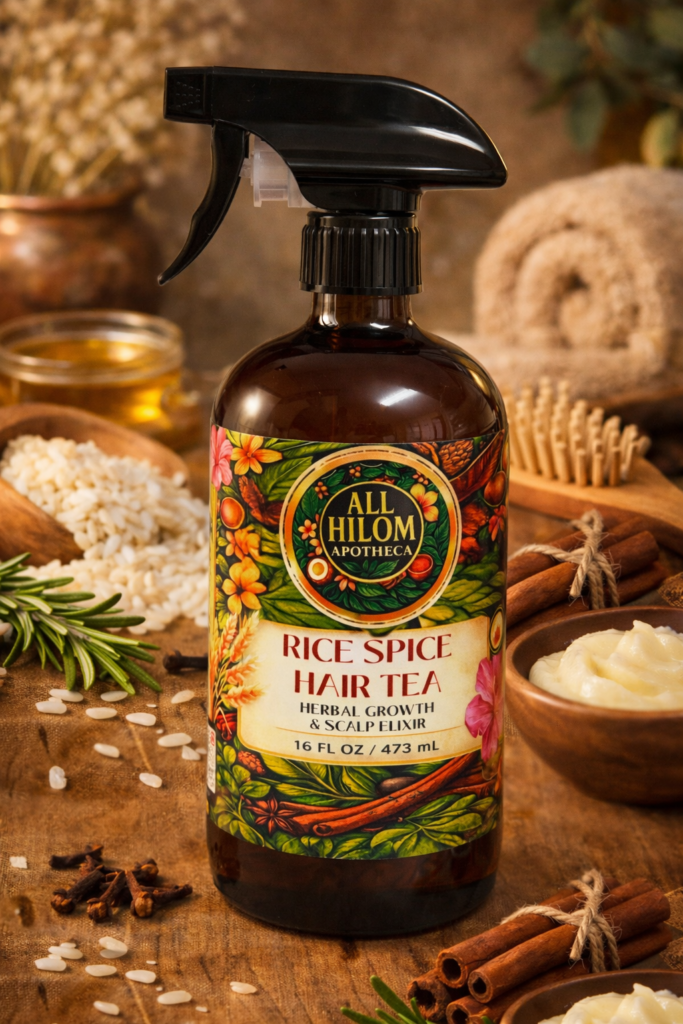
Hair care is often most effective when it feels less rushed and more intentional. Instead of relying only on quick fixes, many people are turning toward slower, more natural rituals that support the scalp as the foundation of healthy hair. One of those rituals is rice spice hair tea, a botanical-inspired rinse made with rice water and warming herbs or spices that are often associated with scalp care and hair nourishment.
This kind of rinse combines two ideas that have long appeared in beauty traditions: rice-based treatments for softness and shine, and herbs or spices chosen for their refreshing, stimulating, or comforting qualities. Together, they create a ritual that feels both practical and restorative.
What Is Rice Spice Hair Tea?
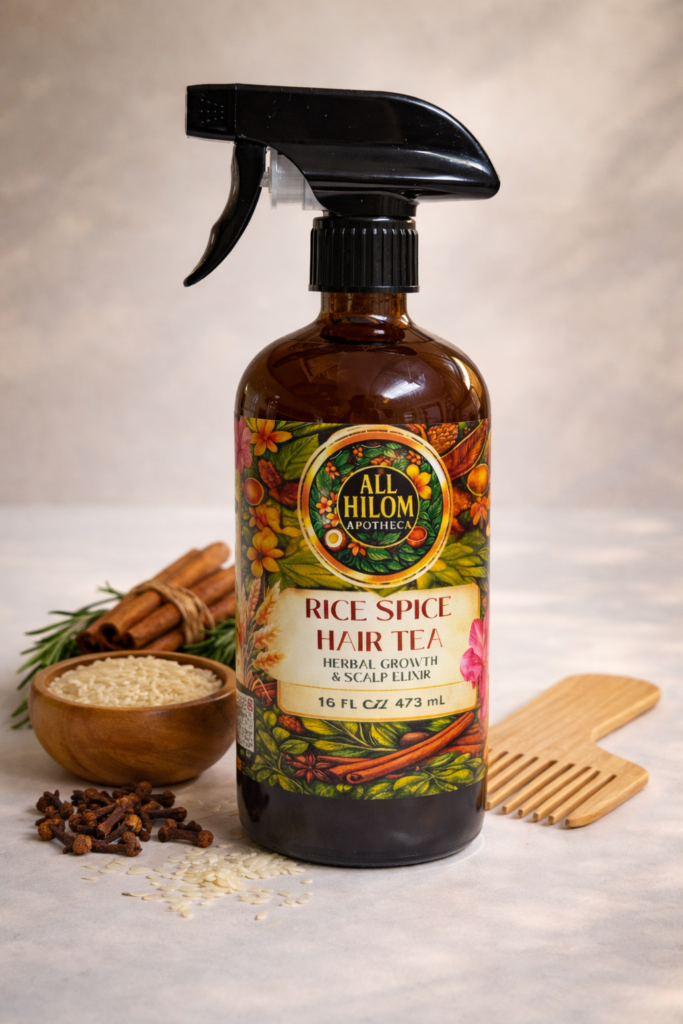
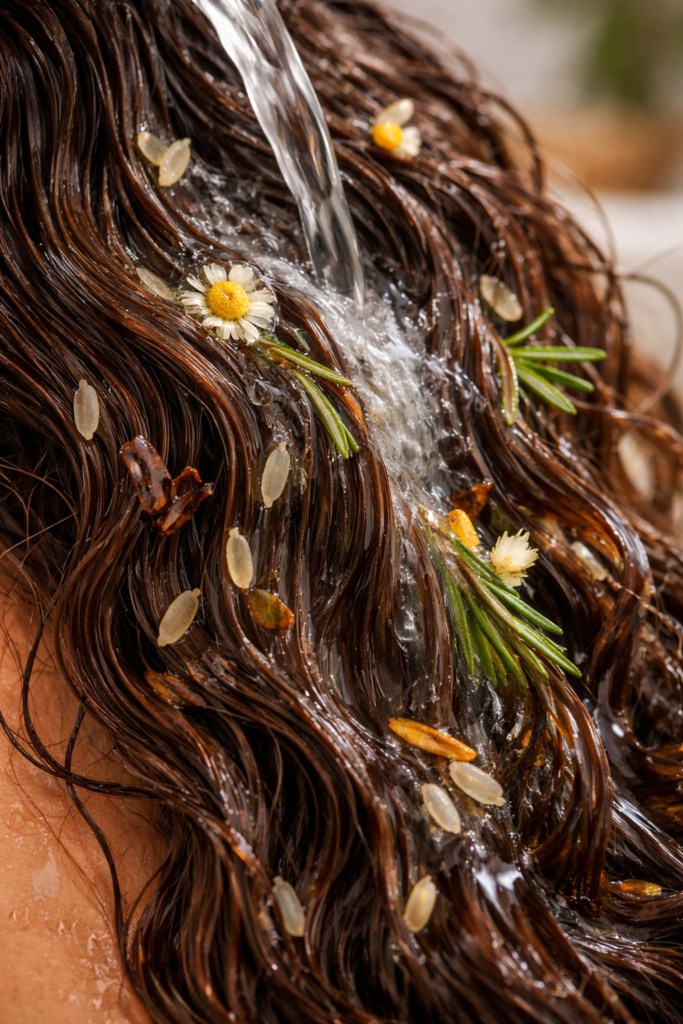
Rice spice hair tea is typically a liquid hair rinse made by steeping rice water with selected spices, herbs, or botanicals. Depending on the recipe, this may include ingredients like fenugreek, cloves, rosemary, ginger, cinnamon, hibiscus, or other plant-based additions often used in natural hair rituals.
The result is a lightweight treatment that can be applied to the scalp and hair after washing or before conditioning, depending on the routine. Some people use it as a final rinse, while others let it sit briefly before rinsing out. The appeal of rice spice hair tea lies not only in its ingredients, but in the ritual itself. It encourages you to slow down, massage your scalp, and treat hair care as a form of regular support rather than occasional repair.
Why the Scalp Matters in Any Growth Routine
When people talk about hair growth, they often focus on strands, length, or breakage. But real support begins with the scalp. A healthy scalp creates the environment where hair can thrive. If the scalp feels dry, overloaded, irritated, or neglected, hair may not look or feel its best.
That is part of why rituals like rice spice hair tea have become so appealing. They bring attention back to the roots. Applying a liquid rinse can help refresh the scalp, reduce buildup when paired with a good wash routine, and encourage gentle massage. Scalp massage itself can be a valuable part of the ritual because it helps you reconnect with your routine and care for the area where healthy-looking hair begins.
Rather than expecting overnight transformation, this ritual works best as a steady habit. Consistent scalp care can support hair that looks shinier, feels softer, and appears better maintained over time.
Potential Benefits of Rice Spice Hair Tea
One of the main reasons people enjoy rice spice hair tea is that it can leave the hair feeling smoother and more refreshed. Rice-based rinses are often associated with softness, shine, and the appearance of stronger strands. When combined with spices and herbs, the rinse may also create a more invigorating scalp-care experience.
Depending on the ingredients used, rice spice hair tea may help support a cleaner-feeling scalp, add a sense of freshness, and make wash day feel more nourishing. Some people also enjoy the way it can fit into rituals focused on reducing breakage and supporting healthier-looking length retention.
The sensory benefits matter too. Herbal and spice-infused hair rinses can turn a basic wash into a ritual. The warmth of cinnamon, the freshness of rosemary, or the richness of clove can make the experience feel grounding and intentional.
A Ritual for More Than Just Hair
Part of the beauty of rice spice hair tea is that it offers more than cosmetic support. It creates a pause. In a fast-paced routine, taking time to prepare a rinse, section your hair, and massage your scalp can become a calming act of self-care.
This matters because consistency is easier when a ritual feels good. Hair care is less likely to become a chore when it also feels soothing, sensory, and grounding. A ritual like this can help transform wash day from something rushed into something restorative.
For many people, that emotional shift is just as valuable as the visible benefits. Feeling more connected to your body and your routine can change the whole experience of caring for yourself.
How to Use Rice Spice Hair Tea in a Routine
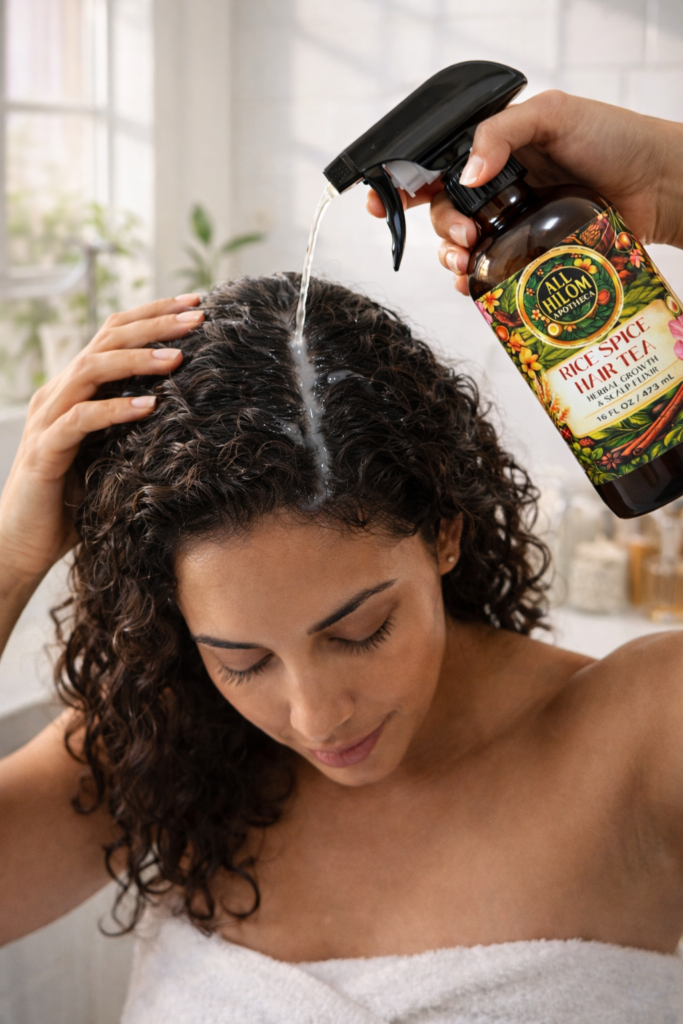
Rice spice hair tea is usually used after cleansing the hair and scalp. It can be poured directly onto the scalp in sections, massaged gently with fingertips, and worked through the length of the hair. Some prefer to let it sit for a few minutes before rinsing, while others follow with conditioner or a deep treatment.
The key is moderation and observation. Every scalp is different, and stronger botanical blends may not suit everyone. Start with a gentle formula and pay attention to how your scalp and hair respond. The goal is support, not overload.
Used thoughtfully, this kind of rinse can complement a routine that already includes cleansing, conditioning, moisture, and gentle handling. It works best as one piece of a balanced approach to scalp care and growth support.
The Power of Small, Consistent Care
Hair rituals often work best when they are simple enough to repeat. Rice spice hair tea is not about chasing perfection. It is about creating small, supportive habits that help your scalp feel cared for and your hair feel nourished.
Over time, that kind of consistency can make a meaningful difference in the way your hair looks and feels. Whether you are drawn to the shine, the scalp-refreshing ritual, or the sense of calm it brings to wash day, rice spice hair tea offers a natural way to turn routine care into something more intentional.